Pokémon Trading Cards: Ultimate 30-Year History and 7 Smart Tips
Pokémon trading cards have been delighting players and collectors for three decades. What began as a Japanese card game in 1996 became a worldwide phenomenon, and in 2026 the Pokémon franchise celebrated its 30th anniversary with special products that brought fans old and new back to the hobby. This guide covers the history of the cards, each major era, the product types you will see on shelves and the collecting approaches that keep the hobby fun.

A short history of Pokémon trading cards
The Japanese launch in 1996
The Pokémon Trading Card Game first launched in Japan in October 1996, published by Media Factory, only months after the original Pokémon Red and Green video games. The cards translated the game’s battles to the table: players used Pokémon, Energy and Trainer cards to knock out the opponent’s Pokémon and take Prize cards.
Wizards of the Coast and the 1999 boom
The game arrived in North America in January 1999, published in English by Wizards of the Coast. The Base Set became a playground craze almost overnight, with Charizard as the most wanted card. Expansions such as Jungle, Fossil, Team Rocket, the Gym sets and the Neo series followed quickly. Today, early English Pokémon trading cards like 1st Edition and Shadowless Base Set cards are some of the most valuable collectibles in the hobby.
The Pokémon Company takes over
Wizards of the Coast’s license ended in 2003, after the e-Card sets such as Expedition, Aquapolis and Skyridge. From EX Ruby & Sapphire onward, the English game was produced by The Pokémon Company’s own international team, which has run it ever since. That continuity is why modern sets follow a steady release schedule and consistent card design.
The major eras of Pokémon trading cards
Collectors often group sets into eras that match the video game generations. Each era brought new card mechanics and new chase cards.
- Wizards of the Coast era (1999-2003): Base Set, Jungle, Fossil, Team Rocket, Gym, Neo and e-Card sets.
- EX era (2003-2007): lowercase Pokémon-ex and the famous Gold Star cards.
- Diamond & Pearl and Platinum (2007-2010): Pokémon LV.X and SP Pokémon.
- HeartGold SoulSilver (2010-2011): two-card Pokémon LEGEND cards.
- Black & White (2011-2013): Pokémon-EX and the first full-art cards.
- XY (2014-2016): Mega Evolution and BREAK cards.
- Sun & Moon (2017-2019): Pokémon-GX and Tag Team cards.
- Sword & Shield (2020-2023): Pokémon V, VMAX, VSTAR and Trainer Gallery subsets.
- Scarlet & Violet (2023-2025): the return of lowercase ex, Tera Pokémon, silver borders on English cards, and illustration rares.
- Mega Evolution (2025-present): Mega Evolution Pokémon ex return as the focus of the current series.
Pokémon trading cards in 2026
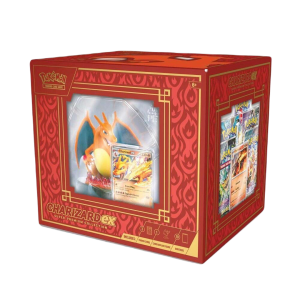
The current Mega Evolution series began in 2025, and 2026 has been packed with releases. Sets such as Mega Evolution—Perfect Order and Mega Evolution—Pitch Black arrived during the year, and Mega Evolution—Delta Reign launches on November 6, 2026, featuring Mega Rayquaza ex and new Legendary Stadium cards whose two halves form one extended artwork.
The 30th anniversary also brought special celebration products, including Elite Trainer Boxes, tins, mini tins and battle decks. These are popular with collectors who want a piece of the anniversary and with families introducing a new generation to Pokémon trading cards. You can browse current sealed items in our booster boxes range and secure upcoming sets through Pokémon pre-orders.
Understanding card types and rarity
Every Pokémon card falls into one of three card types, and rarity determines how often you pull it.
Card types
- Pokémon cards: Basic, Stage 1 and Stage 2 Pokémon, plus special forms like Pokémon ex and Mega Evolution Pokémon ex.
- Trainer cards: Items, Supporters, Stadiums and Pokémon Tools that power your strategy.
- Energy cards: the fuel for attacks, in basic and special varieties.
Rarity basics
Modern sets use symbols and set numbers to show rarity: commons, uncommons and rares make up most packs, while double rares, ultra rares, illustration rares, special illustration rares and hyper rares are the big chase cards. A card numbered above the set’s official count, such as 210/191, is a “secret” rare. Rarity strongly affects value, but condition and demand matter just as much.
Regulation marks
Since the Sword & Shield era, cards carry a small regulation mark letter that tells players whether a card is legal in the Standard format. At the time of writing, Standard uses the H, I and J marks after the March 2026 rotation. Collectors can ignore these marks, but players should check them before building a deck.
Product types: how Pokémon trading cards are sold
Walk into any store and you will see many different products. Here is what each one contains and who it suits.
- Booster packs: randomized packs of cards; the classic way to open Pokémon trading cards.
- Booster boxes: a sealed display of packs, usually 36 in English sets, offering the best per-pack value for big openers.
- Elite Trainer Boxes (ETBs): several packs plus sleeves, dice, energy cards, a promo and a storage box.
- Booster bundles: a handful of packs in a simple package.
- Tins and mini tins: collectible metal containers with packs and often a promo card.
- Collection boxes: themed boxes with promos, packs and sometimes a figure or pin.
- Theme and battle decks: ready-to-play decks for new players.
- Singles: individual cards bought directly, ideal for completing sets or decks.
- Graded cards: singles authenticated and sealed in a protective slab with a condition grade.
Japanese vs English Pokémon trading cards
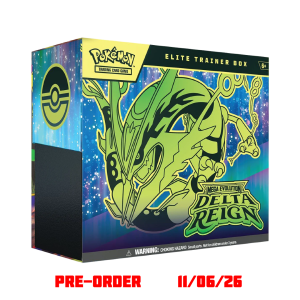
Japanese sets usually release before their English counterparts, and the card lists are often split or combined differently in English. Japanese products also include special formats such as High Class Packs, which collect popular cards and premium rarities into one set; the Mega Dream ex High Class Pack is a recent example.
Many collectors love Japanese cards for their print quality and earlier access to new artwork. Japanese and English cards can both be collected, but only English cards are used in most US tournaments. Explore our Japanese Pokémon section to see what is available.
7 smart approaches to collecting Pokémon trading cards
There is no single right way to collect. Choosing an approach keeps your collection focused and your spending under control.
- Collect a full set. Pick one expansion and complete every number, using singles to finish the last few cards.
- Collect your favorite Pokémon. Many fans chase every card of one Pokémon, such as Pikachu, Eevee or Charizard.
- Collect by artist. Illustrators have devoted followings, and artist binders look stunning.
- Collect an era. Focus on vintage Wizards cards, the EX era or the modern Mega Evolution series.
- Collect graded showpieces. Buy a few high-quality slabs instead of many raw cards.
- Collect sealed product. Keep unopened boxes or ETBs for display and long-term enjoyment.
- Collect to play. Build decks for the Standard format and play at local events.
Whatever path you choose, singles from our Pokémon singles collection are the most efficient way to fill gaps, and our graded cards are perfect for showpieces.
Vintage vs modern Pokémon trading cards
Vintage cards
Vintage cards from the Wizards era carry nostalgia and scarcity. Condition matters enormously, because many were played with in the late 1990s. Look for graded copies when buying expensive vintage cards, and verify the certification number with the grading company, such as through the PSA price guide.
Modern cards
Modern sets are printed in much larger quantities, but their best cards, such as special illustration rares, can still become valuable thanks to strong demand. Modern cards are easier to find in great condition and are often more affordable for new collectors.

Playing the Pokémon Trading Card Game
Pokémon trading cards are not only collectibles; they power one of the world’s most popular card games. A Standard deck has exactly 60 cards, and you win by taking all six of your Prize cards, knocking out the opponent’s last Pokémon in play, or leaving them with no cards to draw. Official rules and events are listed on the official Pokémon TCG site, and the free Pokémon TCG Live app is a great place to practice.
Battle decks from the 30th Celebration line and other starter products are a great way to learn. Once you know the basics, pick up singles to improve your deck, and protect your cards with sleeves from our accessories range.
Building and growing your collection
- Start with products you enjoy opening, then fill gaps with singles.
- Try mystery boxes or mystery slabs for a fun surprise.
- Pick up card collections for a quick start or bulk for decks.
- Trade or sell duplicates through our sell and trade service.
Iconic Pokémon trading cards through the years
Some cards define their era. Knowing them helps you understand why certain Pokémon trading cards command so much attention.
- Base Set Charizard: the original chase card and the symbol of the 1999 craze.
- Pikachu Illustrator: an extremely rare Japanese promo awarded in an illustration contest, often called the holy grail of Pokémon trading cards.
- Gold Star cards: rare EX-era cards with a star symbol that remain favorites for vintage collectors.
- Full-art Trainers: introduced in the Black & White era, they made Supporter cards into collectibles.
- Alternate-art V cards: Sword & Shield’s alternate arts became some of the most loved modern Pokémon trading cards.
- Special illustration rares: Scarlet & Violet’s full-scene artworks continue that storytelling tradition.
How to judge the condition of Pokémon trading cards
Condition can matter as much as rarity. Before buying or selling Pokémon trading cards, look at these four areas under good light.
- Centering: are the borders even on all sides?
- Corners: are they sharp, or do they show whitening or rounding?
- Edges: look for chips, whitening or rough cuts.
- Surface: check for scratches, print lines, dents and fingerprints.
Raw cards are usually described with terms such as Near Mint or Lightly Played, while graded Pokémon trading cards receive a number grade from a company like PSA, BGS or CGC. If a card might be worth grading, keep it sleeved and in a toploader from the moment you pull it.
Pokémon trading cards as a family hobby
One of the best things about Pokémon trading cards is that they bridge generations. Parents who opened Base Set in 1999 now open Mega Evolution packs with their kids. Starting together is simple: pick up a battle deck or a small tin, learn the rules side by side, and let younger collectors choose their own favorite Pokémon to collect.
Setting a few family rules helps: agree on a monthly budget, sleeve favorite cards straight away, and keep trading fair between siblings and friends. The 30th anniversary products are a natural place to start, since they celebrate the whole history of Pokémon trading cards in one release.
Pokémon trading cards FAQ
When did Pokémon trading cards first come out?
The game launched in Japan in October 1996 and arrived in North America in January 1999, when Wizards of the Coast published the English Base Set.
What are the most valuable Pokémon trading cards?
Rare vintage cards such as 1st Edition Base Set Charizard, promotional trophy cards and high-grade special illustration rares are among the most valuable. Condition, rarity and demand all affect price.
How can I tell what era a card is from?
Check the set symbol, card design and copyright year printed at the bottom of the card. Mechanics such as EX, GX, V or Mega Evolution ex also indicate the era.
Are Japanese Pokémon trading cards worth collecting?
Yes. Japanese cards are prized for print quality, unique products and earlier releases, and many collectors keep both Japanese and English binders.
Should I open my Pokémon trading cards or keep them sealed?
It depends on your goals. Opening is part of the fun, while sealed product suits display or long-term collecting. Many collectors do both.
Explore the full TCG Store USA shop or contact our team for help finding a card.
Buying Pokémon trading cards online: a practical checklist
Shopping for Pokémon trading cards online is convenient, but a little preparation helps you get exactly what you expect. Use this checklist every time you buy Pokémon TCG products, whether you are picking up a single card, a sealed box or a premium collection.
Before you order
- Confirm the exact product. Check the set name, card number, language and finish in the listing title and photos.
- Read the condition. Singles are usually listed as Near Mint, Lightly Played or similar. Graded cards show the grading company and grade.
- Check stock status. In-stock items ship sooner than pre-orders, which ship when the product releases.
- Compare value, not just price. A bundle with sleeves, dice or promos may be better value than packs alone.
- Know the policies. Read the shipping, returns and contact information before checkout.
When your order arrives
- Open the parcel carefully and check that everything matches the order.
- Inspect singles and slabs under good light straight away.
- Sleeve and store cards immediately so they keep their condition.
- Contact the store quickly if anything is wrong, with photos of the item and packaging.
How to store and care for Pokémon trading cards
Good storage protects both the look and the value of Pokémon trading cards. Cards are made of layered paper and ink, so heat, light, moisture and pressure all cause damage over time. A few simple habits make a big difference.
- Sleeve first. A soft penny sleeve stops scratches and fingerprints.
- Add rigid protection. Toploaders or semi-rigid holders stop bends for valuable cards.
- Choose the right binder. Side-loading, acid-free binders keep cards secure and easy to view. Avoid ring binders that press into cards.
- Control the environment. Keep cards in a cool, dry room away from windows, radiators and damp basements.
- Store sealed product flat. Boxes and tins last longer stored flat and out of direct light.
- Handle with clean, dry hands. Oils and moisture can mark card surfaces.
You can find sleeves, toploaders, binders and deck boxes in our TCG accessories range.
Useful terms for Pokémon trading cards collectors
- Single: an individual card sold on its own.
- Sealed: unopened product in its original factory wrap.
- Pull rate: how often a type of card appears in packs.
- Chase card: the most wanted card in a set.
- Slab: a card graded and sealed in a hard plastic case.
- NM / LP / MP / HP: condition grades from Near Mint to Heavily Played.
- Reprint: a card printed again in a later product.
- Pre-order: reserving a product before its release date.
Common mistakes to avoid with Pokémon trading cards
Even experienced collectors make avoidable mistakes. Keeping these in mind will save you money and protect your cards.
- Chasing one card through endless packs. If you need a specific card, the single is almost always the cheaper route.
- Skipping protection. A card left unsleeved for a day can pick up a scratch that lowers its value.
- Buying on hype alone. Prices can move quickly after a release. Check several recent sales before paying a premium.
- Ignoring condition notes. Two copies of the same card can differ greatly in value because of wear.
- Storing cards in the wrong place. Attics, garages and sunny windowsills are hard on cardboard.
- Forgetting your goal. A clear plan, such as finishing a set or upgrading a deck, keeps spending focused.
A simple plan to get started with Pokémon trading cards
- Set a goal. Decide whether you are collecting, playing or both.
- Set a monthly budget. Spending a fixed amount keeps the hobby fun and sustainable.
- Mix sealed and singles. Open packs for enjoyment and buy singles for the cards you really need.
- Protect as you go. Sleeves and toploaders cost little compared with the cards they protect.
- Track your collection. A simple list shows what you own and what you still want.
- Sell or trade duplicates. Turn cards you do not need into new additions through a trusted store.
Why shop for Pokémon trading cards at TCG Store USA
TCG Store USA is an online trading card shop for collectors and players. We list Pokémon TCG products with clear titles and photos, separate in-stock items from pre-orders, and offer a sell and trade service when you want to turn cards into cash or store credit. Browse our singles, booster boxes and graded cards, or contact us with any question about an order or product. For official news, rules and release announcements, visit the official Pokémon TCG site.
Final thoughts on Pokémon trading cards
Thirty years after their debut, Pokémon trading cards remain one of the most exciting hobbies around. Learn the eras, understand the product types and choose a collecting approach that fits your goals and budget. Whether you are chasing vintage holos, celebrating the 30th anniversary or building your first deck, every card in your collection tells part of an incredible story.