Pokémon Cards Value: 9 Proven Ways to Find What Your Cards Are Worth
Pokémon cards value can range from a few cents to life-changing sums, and the difference often comes down to details. This guide walks you through nine proven ways to work out Pokémon cards value, explains the factors that push prices up or down, and shows you how to protect, grade and sell the cards that are worth the most.
Why Pokémon cards value varies so much
Two cards that look almost identical can have very different prices. Pokémon cards value depends on the exact printing, the condition, whether the card is graded, the language and how much collectors want it right now. Understanding those factors is the first step to valuing any card accurately.
The four biggest value drivers
- Rarity: secret rares, special illustration rares and vintage holos sit at the top.
- Condition: sharp corners and a clean surface can multiply value.
- Demand: popular Pokémon and popular artwork sell for more.
- Grading: a high grade from a trusted company adds confidence and value.
1. Identify the exact card
Before you can judge Pokémon cards value, you need to know exactly which card you have. Check the set symbol, the card number and any special stamps. Many Pokémon appear in dozens of sets, and a Charizard from one set can be worth a hundred times more than a Charizard from another.
Use the official Pokémon card database to confirm the set, number and artwork.
Details to record
- Card name and set name.
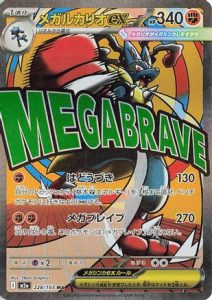
- Card number, such as 228/193.
- Rarity symbol.
- Edition stamps on vintage cards, such as First Edition.
- Language.
- Holo, reverse holo or non-holo.
2. Check the rarity
Rarity is the foundation of Pokémon cards value. Commons and uncommons are rarely worth much individually, while rares, ultra rares, illustration rares and secret rares can be worth far more. Our guide to Pokémon singles explains how to read rarity symbols and card numbers.
3. Assess the condition honestly
Condition has the biggest effect on Pokémon cards value after rarity. Examine the card under bright light, front and back.
- Corners: look for whitening or rounding.
- Edges: check for chips, nicks and whitening along the borders.
- Surface: look for scratches, print lines, dents and fingerprints.
- Centering: compare the width of the borders on each side.
Common condition grades for raw cards
- Near Mint (NM): looks fresh from the pack with only tiny flaws.
- Lightly Played (LP): minor edge or corner wear.
- Moderately Played (MP): visible wear but no major damage.
- Heavily Played (HP): significant wear, creases or marks.
- Damaged: tears, heavy creases or water damage.
A Near Mint copy can be worth several times more than a Moderately Played copy of the same card, so be honest about condition when you estimate Pokémon cards value.
4. Look up recent sold prices
Asking prices are not the same as real Pokémon cards value. What matters is what buyers have actually paid recently. Look up completed sales for the same card, in the same condition and the same language. Compare several sales rather than relying on one, because a single sale can be unusually high or low.
Tips for comparing sales
- Match the exact set and number.
- Match the condition or grade.
- Ignore listings that never sold.
- Look at the last few weeks rather than months ago.
5. Use price guides for graded cards
For graded cards, price guides show recent sales by grade. The PSA price guide is a useful starting point. Pokémon cards value can jump sharply between grades, especially between a 9 and a 10, so always compare the same grade.
6. Consider grading valuable cards
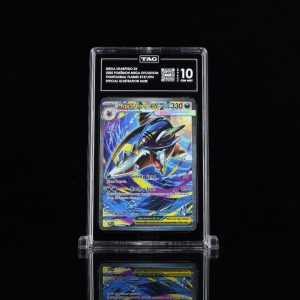
Professional grading can increase Pokémon cards value for cards in excellent condition. A grading company inspects the card, assigns a grade and seals it in a tamper-evident case with a certificate number. Graded cards are easier to sell because buyers trust the grade.
When grading makes sense
- The card is valuable even before grading.
- The corners, edges and surface look close to perfect.
- The card is well centred.
- You plan to sell or keep the card long term.
Browse our graded Pokémon cards to see how graded cards are listed.
7. Factor in language and edition
Pokémon cards value differs between languages. Some Japanese cards are worth more than their English versions because of exclusive art, earlier releases or limited print runs. Others are worth less because more copies exist. First Edition and Shadowless vintage cards are worth more than later Unlimited prints. Explore our Japanese Pokémon cards to see Japan-exclusive products.
8. Watch demand and trends
Demand moves Pokémon cards value up and down. A card can rise when it becomes popular in competitive play, when a character appears in a new game or show, or when collectors fall in love with its artwork. Prices can also fall when a card is reprinted or when interest moves on to a new set.
What tends to hold value
- Iconic Pokémon such as Charizard, Pikachu, Umbreon and Mewtwo.
- Special illustration rares with striking artwork.
- Vintage holos in high grades.
- Limited promos and event cards.
- Sealed product from popular sets.
9. Get a trade-in offer
If you want to turn your collection into cash or new cards, getting an offer from a store is a quick way to understand practical Pokémon cards value. Send your list through our sell and trade page with card names, sets, numbers and conditions, and we will reply with an offer in cash or store credit.
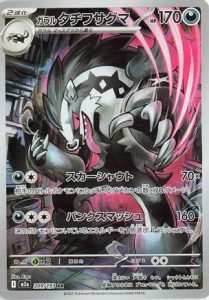
Pokémon cards value by era
Different eras of the Pokémon TCG have very different value profiles.
Vintage (Base Set to Neo)
The earliest sets are prized for nostalgia. First Edition and Shadowless holos are the most valuable, especially in high grades. Even non-holo vintage cards can carry value in excellent condition.
Middle eras (EX to Black and White)
Gold Star cards, Crystal cards, Shining Pokémon and early full arts from these eras are popular with collectors who grew up with them.
Modern (Sword and Shield onward)
Modern Pokémon cards value is driven by alternate arts, illustration rares, special illustration rares and gold cards. Popular sets such as Pokémon 151, Prismatic Evolutions and the Mega Evolution sets have created strong demand for their chase cards.
Sealed product value
Sealed booster boxes, Elite Trainer Boxes and collections can also hold or increase in value, especially from popular sets that are no longer printed. Keep sealed product in its original wrap, stored flat away from heat and sunlight. Browse our booster boxes for sealed product from current and recent sets.
Common mistakes when valuing cards
- Using asking prices instead of sold prices.
- Comparing a raw card with graded sales.
- Overestimating condition.
- Confusing similar cards from different sets.
- Ignoring language and edition differences.
- Cleaning cards, which can damage the surface.
How to protect Pokémon cards value
Protecting your cards protects their value. Sleeve valuable cards immediately, store them in toploaders or side-loading binders, keep them out of sunlight, and avoid humid rooms. Our TCG accessories section has everything you need.
Pokémon cards value FAQ
How do I find out the value of my Pokémon cards for free?
Identify the exact card, assess the condition honestly and look up recent sold prices for the same card and condition. For graded cards, check price guides by grade.
Are old Pokémon cards worth money?
Some are. Vintage holos, First Edition cards and cards in excellent condition can be valuable. Common cards from old sets are often worth very little unless they are in top condition.
Do Pokémon cards go up in value?
Some cards rise over time, especially iconic Pokémon, high-grade vintage cards and chase cards from popular sets. Prices can also fall, so collect what you enjoy rather than treating cards purely as an investment.
Does grading always increase Pokémon cards value?
No. Grading adds the most value to cards in excellent condition. A card with visible wear may receive a low grade that adds little or nothing to its value.
Where can I sell valuable Pokémon cards?
You can sell on marketplaces or to a store. Selling to a store such as TCG Store USA is faster: send one list and get one offer.
A step-by-step example of finding Pokémon cards value
To make the process concrete, here is how you might work out the value of a single card from a binder you have just found. The same steps apply whether the card is vintage or modern.
- Identify the card. Read the name, set symbol and card number. Confirm the match in a card database.
- Note the version. Is it holo, reverse holo or non-holo? Is there a First Edition stamp or a promo stamp?
- Grade the condition yourself. Check corners, edges, surface and centering in good light, and pick an honest raw condition.
- Find sold listings. Search for the same card, version and condition, and note the last five sold prices.
- Take the middle. Ignore the highest and lowest sale and use the middle range as a realistic Pokémon cards value.
- Decide on grading. If graded sales are much higher and your card looks near perfect, grading may be worth it.
Pokémon cards value for whole collections
Valuing a large collection card by card takes a long time. A faster approach is to sort first and value only what matters.
Sorting a bulk collection
- Separate by rarity. Put commons and uncommons in one pile and rares and above in another.
- Pull out holos and special cards. Full arts, illustration rares, secret rares and promos go to the top of the list.
- Check vintage stamps. First Edition and Shadowless cards deserve individual checks.
- Value the top pile individually. Look up each important card.
- Value bulk by count. Commons and uncommons are usually priced by quantity rather than one by one.
Once you have a list of the important cards with conditions, you can request an offer through our sell and trade page.
How reprints affect Pokémon cards value
When a popular card is reprinted in a new product, the original printing can lose some value because more copies of a similar card become available. Collectors often still prefer the original printing, especially in high grade, so the effect varies. Reprints usually affect playable cards more than collectible art cards. Keep an eye on new product announcements if you own cards that are popular in competitive play.
Pokémon cards value and competitive play
Some modern cards are valuable because they are strong in the competitive game rather than because they are rare. Their value can rise quickly when a deck becomes popular in tournaments and fall when the card rotates out of the Standard format. Collectible art cards tend to be more stable because their demand comes from collectors. If you are buying cards to play, focus on what you need for your deck rather than trying to time the market.
Simple rules for buyers
- Buy cards you want to use or display, not just because the price is moving.
- Check several recent sales before paying a premium.
- Prefer clear listings with real photos.
- Protect cards as soon as they arrive so they keep their value.
Insurance and records
If your collection has grown valuable, keep a simple record: card name, set, number, condition or grade, purchase price and date, and a photo. A spreadsheet is enough. These records help you understand Pokémon cards value over time and are useful if you ever need to make an insurance claim or sell part of the collection.
Buying Pokémon cards value online: a practical checklist
Shopping for Pokémon cards value online is convenient, but a little preparation helps you get exactly what you expect. Use this checklist every time you buy Pokémon TCG products, whether you are picking up a single card, a sealed box or a premium collection.
Before you order
- Confirm the exact product. Check the set name, card number, language and finish in the listing title and photos.
- Read the condition. Singles are usually listed as Near Mint, Lightly Played or similar. Graded cards show the grading company and grade.
- Check stock status. In-stock items ship sooner than pre-orders, which ship when the product releases.
- Compare value, not just price. A bundle with sleeves, dice or promos may be better value than packs alone.
- Know the policies. Read the shipping, returns and contact information before checkout.
When your order arrives
- Open the parcel carefully and check that everything matches the order.
- Inspect singles and slabs under good light straight away.
- Sleeve and store cards immediately so they keep their condition.
- Contact the store quickly if anything is wrong, with photos of the item and packaging.
How to store and care for Pokémon cards value
Good storage protects both the look and the value of Pokémon cards value. Cards are made of layered paper and ink, so heat, light, moisture and pressure all cause damage over time. A few simple habits make a big difference.
- Sleeve first. A soft penny sleeve stops scratches and fingerprints.
- Add rigid protection. Toploaders or semi-rigid holders stop bends for valuable cards.
- Choose the right binder. Side-loading, acid-free binders keep cards secure and easy to view. Avoid ring binders that press into cards.
- Control the environment. Keep cards in a cool, dry room away from windows, radiators and damp basements.
- Store sealed product flat. Boxes and tins last longer stored flat and out of direct light.
- Handle with clean, dry hands. Oils and moisture can mark card surfaces.
You can find sleeves, toploaders, binders and deck boxes in our TCG accessories range.
Useful terms for Pokémon cards value collectors
- Single: an individual card sold on its own.
- Sealed: unopened product in its original factory wrap.
- Pull rate: how often a type of card appears in packs.
- Chase card: the most wanted card in a set.
- Slab: a card graded and sealed in a hard plastic case.
- NM / LP / MP / HP: condition grades from Near Mint to Heavily Played.
- Reprint: a card printed again in a later product.
- Pre-order: reserving a product before its release date.
Common mistakes to avoid with Pokémon cards value
Even experienced collectors make avoidable mistakes. Keeping these in mind will save you money and protect your cards.
- Chasing one card through endless packs. If you need a specific card, the single is almost always the cheaper route.
- Skipping protection. A card left unsleeved for a day can pick up a scratch that lowers its value.
- Buying on hype alone. Prices can move quickly after a release. Check several recent sales before paying a premium.
- Ignoring condition notes. Two copies of the same card can differ greatly in value because of wear.
- Storing cards in the wrong place. Attics, garages and sunny windowsills are hard on cardboard.
- Forgetting your goal. A clear plan, such as finishing a set or upgrading a deck, keeps spending focused.
A simple plan to get started with Pokémon cards value
- Set a goal. Decide whether you are collecting, playing or both.
- Set a monthly budget. Spending a fixed amount keeps the hobby fun and sustainable.
- Mix sealed and singles. Open packs for enjoyment and buy singles for the cards you really need.
- Protect as you go. Sleeves and toploaders cost little compared with the cards they protect.
- Track your collection. A simple list shows what you own and what you still want.
- Sell or trade duplicates. Turn cards you do not need into new additions through a trusted store.
Why shop for Pokémon cards value at TCG Store USA
TCG Store USA is an online trading card shop for collectors and players. We list Pokémon TCG products with clear titles and photos, separate in-stock items from pre-orders, and offer a sell and trade service when you want to turn cards into cash or store credit. Browse our singles, booster boxes and graded cards, or contact us with any question about an order or product. For official news, rules and release announcements, visit the official Pokémon TCG site.
Final thoughts on Pokémon cards value
Working out Pokémon cards value is about details: the exact card, the condition, the grade, the language and current demand. Use recent sold prices rather than asking prices, protect your cards from the moment you get them, and grade the best ones. Whether you are buying, selling or simply curious, understanding Pokémon cards value makes you a smarter collector. Browse our shop to see current prices on singles, sealed product and graded cards.