One Piece Trading Cards: 2026 Complete Guide to the Best Sets
One Piece trading cards have gone from a niche import to one of the most talked-about hobbies in the card world in just a few years. Whether you grew up with Luffy and the Straw Hats or you simply love chasing beautiful alternate art, this guide walks you through how the game works, every major English set, what each rarity symbol means, and which products make the most sense for players, collectors and gift buyers.
We will keep things practical. By the end you should know the difference between an SR and a SEC, why manga rares command such attention, and whether you should start with a starter deck, a booster box or a handful of singles.
What are One Piece trading cards?
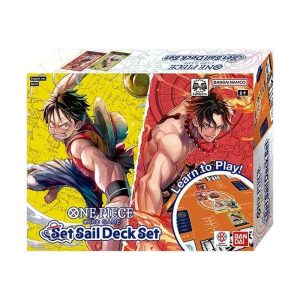
The One Piece Card Game is published by Bandai and based on Eiichiro Oda’s long-running manga and anime. It launched in Japan in 2022, and the English version followed in December 2022 with the first booster set, Romance Dawn (OP-01). Since then Bandai has kept a steady release schedule of main booster sets, starter decks, extra boosters and premium collections.
Unlike some older games, One Piece trading cards were designed from day one for both competitive play and collecting. Every set includes plenty of tournament-ready cards alongside premium parallel versions, so a single print run serves players building decks and collectors building binders at the same time.
How a game works in one minute
Each player chooses a Leader card, then builds a 50-card main deck in the Leader’s colors plus a separate DON!! deck of 10 cards. DON!! cards act as your resource: you add them each turn and attach them to characters to boost power or pay for cards. Your Leader’s life value decides how many life cards you start with, and you win by knocking out your opponent’s last life and landing one more hit.
Characters, Events and Stages make up the main deck. Many characters carry a counter value printed on the side of the card, which you can discard from hand to defend during your opponent’s attack. That simple counter system gives the game a lot of tactical depth and makes every card in hand feel valuable.
The main English sets of One Piece trading cards
Main booster sets of One Piece trading cards use the OP code. Knowing the sequence helps you date a card, judge how scarce older sealed product might be, and understand which Leaders belong to which era of play.
- OP-01 Romance Dawn: the set that started it all, home to early Leaders and famously scarce first-wave sealed product.
- OP-02 Paramount War: Marineford-era characters such as Whitebeard and Ace.
- OP-03 Pillars of Strength: introduced several iconic Leaders and strong yellow and black strategies.
- OP-04 Kingdoms of Intrigue: Alabasta and Dressrosa themes.
- OP-05 Awakening of the New Era: home of the Gear 5 Luffy manga rare, one of the hobby’s most famous chases.
- OP-06 Wings of the Captain and OP-07 500 Years in the Future: expanded the color pairings and the Egghead storyline.
- OP-08 Two Legends and OP-09 Emperors in the New World: powerful Yonko-themed cards and more treasure-tier art.
- OP-10 Royal Blood through OP-13 Carrying On His Will: the 2025 sets, with OP-13 drawing particular attention for its red super alternate art chases.
- OP-14 The Azure Sea’s Seven, OP-15 Adventure on Kami’s Island and OP-16 The Time of Battle: the 2026 releases so far at the time of writing (November 2026).
Release schedules shift, so always check the official One Piece Card Game website for confirmed dates and product lists before you plan a purchase.
Extra boosters, premium boosters and starter decks
Beyond the OP line, Bandai releases Extra Boosters (EB) such as the Anime 25th Collection and One Piece Heroines Edition, and Premium Boosters (PRB) such as One Piece Card The Best, which reprint popular cards with upgraded finishes and new parallels. Starter decks (ST) are ready-to-play 51-card decks built around one Leader, and they are the cheapest way to learn the rules.
One Piece trading cards rarity guide
All One Piece trading cards show a rarity code in the lower corner. Learning these codes is the single most useful skill for anyone opening packs or buying singles, because the same character can exist at several rarities with very different values.
- C (Common) and UC (Uncommon): the backbone of every deck. Many are tournament staples despite low rarity.
- R (Rare): stronger effects and a light foil treatment.
- SR (Super Rare): full foil cards, often the key engine pieces of competitive decks.
- SEC (Secret Rare): the top regular rarity in a set, usually a headline character with dramatic art.
- L (Leader): the card that defines your deck. Leaders come in standard and parallel versions.
- SP (Special): reprints of popular cards from earlier sets with special gold-accented art, inserted into newer boosters.
- TR (Treasure Rare): a newer premium slot featuring striking full art versions.
Alternate arts and parallels
Most SR, SEC and Leader cards also exist as parallel versions, which collectors call alt arts. They play exactly the same as the base card but feature new illustrations, often extending beyond the normal frame, plus textured or patterned foil. For many collectors, the alt art is the version that matters, and it is usually the reason a set’s chase list looks so exciting.
Manga rares: the true grails
Manga rares are the rarest One Piece trading cards for many fans. They reproduce panels from Oda’s black-and-white manga, sometimes with splashes of color, and they are among the hardest pulls in the game. The Gear 5 Luffy manga rare from Awakening of the New Era became a symbol of the hobby. If you are hunting manga rares, buying the single or a graded copy is almost always more realistic than trying to pull one.
DON!! cards and promos
Even the humble DON!! card has collectible versions, which surprises people new to One Piece trading cards. Some boosters include alternate DON!! cards with character art or gold foil, and tournament prize packs and event promos add another layer for completionists.
Which One Piece trading cards products should you buy?
The right way to buy One Piece trading cards depends on what you want to do with the cards. Here is a quick breakdown of the main formats and who each one suits best.
Starter decks
A starter deck gives you a Leader, a full playable deck and a DON!! deck in one box. They are ideal for brand-new players, kids and anyone who wants to learn the rules with a friend. Two different starter decks make a perfect head-to-head kit.
Booster packs and booster boxes
English main-set booster boxes contain 24 packs. Opening a box is the most exciting way to experience a set and gives you a broad spread of commons, uncommons and rares for deckbuilding, with a shot at SR, SEC and parallel pulls. Browse our booster boxes if you enjoy the opening experience or want to keep a box sealed as part of your collection.
Singles
If you need four copies of a specific SR for your deck, or you want one particular alt art, singles are almost always the cheaper and faster route. You can browse our One Piece Card Game section for individual cards and sealed product together.
Japanese releases
Japanese One Piece trading cards release months before their English counterparts and often have slightly different print quality and pull experiences. Some collectors prefer Japanese parallels for their art and price. If you play in English-language tournaments, check the event rules before using Japanese cards in your deck.
Collecting One Piece trading cards like a pro
Collecting One Piece trading cards rewards a clear plan. With so many sets and variants, it is easy to buy randomly and end up with a box of cards that do not tell any story. Pick a lane and your collection will feel more satisfying and hold its value better.
- Character collections: chase every version of one character, such as all Luffy Leaders and alt arts. This is the most popular approach and the easiest to display.
- Crew collections: collect one crew, such as the Straw Hats, the Red-Haired Pirates or the Whitebeard Pirates.
- Master sets: one copy of every card in a single set, including parallels. Rewarding but demanding.
- Grail hunting: focus a budget on a few manga rares, SEC alt arts or graded copies.
Graded copies of key cards add security for high-end purchases. Explore our graded cards if you want a card that has already been authenticated and assessed for condition.
Spotting value in One Piece trading cards
Value in One Piece trading cards usually comes from three things working together: a beloved character, striking art, and real competitive demand. A card that sees heavy tournament play can rise quickly when a new Leader makes it essential, while character-driven alt arts tend to hold steady because collectors keep wanting them regardless of the meta.
- Fan-favorite characters such as Luffy, Zoro, Shanks, Ace, Law, Nami, Yamato and Boa Hancock consistently draw interest.
- First-print sealed product from early sets has become noticeably harder to find.
- Reprints in premium boosters can lower the value of an older version, so watch announcements.
- Condition matters more for parallels, because their textured foil shows wear and edge whitening easily.
Playing competitively with One Piece trading cards
For One Piece trading cards, Bandai runs official organized play, from store-level events to regional and championship tournaments. Competitive play uses a Standard format with a block rotation system, and Bandai also maintains a ban and restriction list. Formats and lists are updated regularly, so at the time of writing (November 2026) you should check the official site for the current legal blocks and any restricted cards before you build.
When you choose a first competitive deck, start with a Leader that has an accessible list and good support in recent sets. Learning one Leader deeply teaches you more than switching decks every week, and it lets you upgrade gradually with singles instead of buying everything at once.
Upgrading a starter deck
The smartest upgrade path for many players is to pick up a starter deck, play a few games, then replace the weakest cards with stronger commons, uncommons and SRs from recent boosters. Within a few purchases you can turn a learning deck into something that competes at your local store night.
Gift ideas with One Piece trading cards
One Piece trading cards make excellent gifts because the franchise has fans of every age. For a new player, two starter decks and a set of sleeves cover everything needed to play. For an established collector, a sealed booster box, a graded alt art of their favorite character or a fun mystery box adds excitement. Pair any gift with protective sleeves and a deck box from our accessories range.
If you are clearing out an old collection to fund new purchases, you can also turn spare cards into store credit or cash through our sell and trade page. Questions about a specific card or set? Reach us any time through our contact page.
English vs Japanese One Piece trading cards
English and Japanese One Piece trading cards share the same artwork and card numbers, but they behave differently as collectibles. Japanese sets arrive first, so the Japanese community sets early prices and decides which alt arts become chases. English sets follow months later and are the version used in most North American tournaments.
- Players in English events should buy English One Piece trading cards for their main deck.
- Art collectors often pick Japanese parallels, which can be cheaper for the same illustration.
- Graders should note that the major grading companies accept both languages, but values differ between them.
Mixing both languages in a binder is perfectly fine. Many collectors keep English One Piece trading cards for play and Japanese copies for display, which gives the best of both worlds.
One Piece trading cards FAQ
Are One Piece trading cards a good investment?
Some cards have risen sharply, but prices can also fall when reprints arrive or demand cools. Buy cards you enjoy owning first, and treat any rise in value as a bonus rather than a promise.
What is the rarest type of One Piece card?
Manga rares and special treasure-tier parallels are generally the hardest pulls, followed by SEC alternate arts. Serialized or prize promos from major events are also extremely limited.
How many cards are in a One Piece booster pack?
English main-set booster packs contain 12 cards, and a standard booster box holds 24 packs. Extra and premium boosters can differ, so check each product listing.
Can I play Japanese and English cards together?
For casual games, yes, as long as everyone knows what the cards do. Official English tournaments have their own language rules, so confirm with the event organizer first.
Where should a new collector start?
Start with one starter deck and a few packs from the newest set to learn the game, then decide whether you want to focus on playing or collecting. Our full shop lets you compare both paths.
Buying One Piece trading cards online: a practical checklist
Shopping for One Piece trading cards online is convenient, but a little preparation helps you get exactly what you expect. Use this checklist every time you buy One Piece Card Game products, whether you are picking up a single card, a sealed box or a premium collection.
Before you order
- Confirm the exact product. Check the set name, card number, language and finish in the listing title and photos.
- Read the condition. Singles are usually listed as Near Mint, Lightly Played or similar. Graded cards show the grading company and grade.
- Check stock status. In-stock items ship sooner than pre-orders, which ship when the product releases.
- Compare value, not just price. A bundle with sleeves, dice or promos may be better value than packs alone.
- Know the policies. Read the shipping, returns and contact information before checkout.
When your order arrives
- Open the parcel carefully and check that everything matches the order.
- Inspect singles and slabs under good light straight away.
- Sleeve and store cards immediately so they keep their condition.
- Contact the store quickly if anything is wrong, with photos of the item and packaging.
How to store and care for One Piece trading cards
Good storage protects both the look and the value of One Piece trading cards. Cards are made of layered paper and ink, so heat, light, moisture and pressure all cause damage over time. A few simple habits make a big difference.
- Sleeve first. A soft penny sleeve stops scratches and fingerprints.
- Add rigid protection. Toploaders or semi-rigid holders stop bends for valuable cards.
- Choose the right binder. Side-loading, acid-free binders keep cards secure and easy to view. Avoid ring binders that press into cards.
- Control the environment. Keep cards in a cool, dry room away from windows, radiators and damp basements.
- Store sealed product flat. Boxes and tins last longer stored flat and out of direct light.
- Handle with clean, dry hands. Oils and moisture can mark card surfaces.
You can find sleeves, toploaders, binders and deck boxes in our TCG accessories range.
Useful terms for One Piece trading cards collectors
- Single: an individual card sold on its own.
- Sealed: unopened product in its original factory wrap.
- Pull rate: how often a type of card appears in packs.
- Chase card: the most wanted card in a set.
- Slab: a card graded and sealed in a hard plastic case.
- NM / LP / MP / HP: condition grades from Near Mint to Heavily Played.
- Reprint: a card printed again in a later product.
- Pre-order: reserving a product before its release date.
Common mistakes to avoid with One Piece trading cards
Even experienced collectors make avoidable mistakes. Keeping these in mind will save you money and protect your cards.
- Chasing one card through endless packs. If you need a specific card, the single is almost always the cheaper route.
- Skipping protection. A card left unsleeved for a day can pick up a scratch that lowers its value.
- Buying on hype alone. Prices can move quickly after a release. Check several recent sales before paying a premium.
- Ignoring condition notes. Two copies of the same card can differ greatly in value because of wear.
- Storing cards in the wrong place. Attics, garages and sunny windowsills are hard on cardboard.
- Forgetting your goal. A clear plan, such as finishing a set or upgrading a deck, keeps spending focused.
A simple plan to get started with One Piece trading cards
- Set a goal. Decide whether you are collecting, playing or both.
- Set a monthly budget. Spending a fixed amount keeps the hobby fun and sustainable.
- Mix sealed and singles. Open packs for enjoyment and buy singles for the cards you really need.
- Protect as you go. Sleeves and toploaders cost little compared with the cards they protect.
- Track your collection. A simple list shows what you own and what you still want.
- Sell or trade duplicates. Turn cards you do not need into new additions through a trusted store.
Why shop for One Piece trading cards at TCG Store USA
TCG Store USA is an online trading card shop for collectors and players. We list One Piece Card Game products with clear titles and photos, separate in-stock items from pre-orders, and offer a sell and trade service when you want to turn cards into cash or store credit. Browse our singles, booster boxes and graded cards, or contact us with any question about an order or product. For official news, rules and release announcements, visit the official One Piece Card Game site.
Final thoughts on One Piece trading cards
One Piece trading cards combine a fast, tactical game with some of the most beautiful card art in the hobby. Learn the rarity codes, choose a collecting focus, and buy singles for the exact cards you need while saving sealed product for the fun of opening. Do that and every pull, trade and purchase will push your collection toward something you are proud of.