MTG: The Complete 2026 Beginner Guide to Magic That Makes It Easy
MTG, short for Magic: The Gathering, is the original trading card game. It launched in 1993 and is still growing more than three decades later, with new sets every few months, a thriving tournament scene and millions of kitchen-table players. If you have been curious about Magic but felt overwhelmed by the sheer number of cards, this beginner’s guide breaks it down step by step.
By the end you will know what the game is, how the five colors work, which formats suit you, how a turn plays out and exactly which products to buy first. No prior experience needed.
What is MTG?
Magic is a strategy card game for two or more players. Each player is a planeswalker, a powerful wizard who casts spells, summons creatures and uses magical lands to defeat opponents. You build a deck from your collection, and every game plays differently because of the order you draw your cards.
The game was designed by mathematician Richard Garfield and published by Wizards of the Coast. Today it is played in paper, on the free digital client Magic: The Gathering Arena and on Magic Online. Official news, rules and set announcements live on the official Magic: The Gathering website.
How you win a game of MTG
In most formats each player starts at 20 life. You win by reducing your opponent to zero, usually by attacking with creatures and casting damaging spells. You can also win if your opponent must draw from an empty library, or through cards with alternate win conditions. Commander, the most popular casual format, starts players at 40 life instead.
The five colors of MTG
Every MTG card belongs to one or more of five colors, or is colorless. Each color has a personality, strengths and weaknesses. Picking colors is the first big decision when building a deck.
- White: order, protection and armies of small creatures. Good at lifegain and removing threats.
- Blue: knowledge and control. Draws extra cards, counters spells and tricks opponents.
- Black: ambition at any cost. Destroys creatures, brings things back from the graveyard and trades life for power.
- Red: passion and chaos. Fast attackers, direct damage and burn spells.
- Green: nature and growth. Huge creatures and extra mana.
Two-color pairs and three-color groups have their own nicknames, such as Azorius for white-blue or Golgari for black-green. Colorless artifacts like Sol Ring fit into almost any deck.
Mana and lands
Lands are the engine of MTG. You can usually play one land per turn, and tapping lands produces mana that pays for spells. Each basic land type makes one color: Plains for white, Island for blue, Swamp for black, Mountain for red and Forest for green. Balancing your lands and spells is one of the first skills new players learn.
How a turn of MTG works
Every turn follows the same structure. Once it clicks, the rest of the rules fall into place.
- Untap: untap all your tapped permanents.
- Upkeep: some cards trigger here.
- Draw: draw a card (the player who goes first skips this on turn one in two-player games).
- First main phase: play a land and cast creatures and other spells.
- Combat: attack with creatures; your opponent chooses blockers.
- Second main phase: cast more spells after combat.
- End step: pass the turn, discarding down to seven cards if needed.
Instants and abilities can be used at almost any time, even on your opponent’s turn. That interaction is what makes Magic feel so deep.
Popular MTG formats explained
A format is a set of rules for which cards you can use and how decks are built. Choosing the right one is the easiest way to enjoy the game.
Commander
Commander is the most played way to enjoy MTG. Decks are 100 cards, every card except basic lands is a single copy, and a legendary creature leads the deck as your commander. Games usually involve four players at 40 life, which makes it social, swingy and fun. Wizards also uses a bracket system to help groups match decks of similar power; check the official site for the current guidance at the time of writing (November 2026).
Standard
Standard uses only recent sets and rotates, so the card pool stays fresh. Decks are 60 cards minimum with up to four copies of any card except basic lands. It is the format you will see at many local events and on Arena.
Pioneer, Modern, Legacy and Vintage
These eternal or non-rotating formats let you use larger pools of older cards. Pioneer and Modern sit in the middle, while Legacy and Vintage include almost the whole history of the game. They reward investment in staples that keep their usefulness for years.
Limited: Draft and Sealed
In Limited formats you build a 40-card deck on the spot from packs you open. Draft passes packs around a table; Sealed gives each player a pool to build from. Prerelease events use Sealed and are a great first event for beginners.
Pauper and casual variants
Pauper allows only cards printed at common, keeping costs low. Many groups also enjoy house formats such as Two-Headed Giant or Jumpstart battles.
The MTG release calendar in 2026
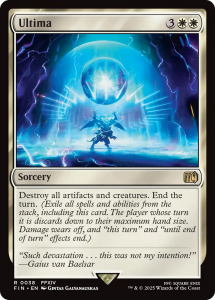
MTG releases several sets a year. In 2026, Standard-legal releases include Lorwyn Eclipsed, Teenage Mutant Ninja Turtles, Secrets of Strixhaven, Marvel Super Heroes, The Hobbit and Reality Fracture, with Star Trek scheduled for mid-November. Sets set in other franchises are called Universes Beyond, a line that also brought the hugely popular Final Fantasy release in 2025.
Universes Beyond sets are a common entry point for newcomers who already love the source material. If a franchise brought you here, that set’s precon decks or starter products are a natural first step. Release dates can move, so confirm on the official site.
MTG products for beginners
There are many ways to buy into the game. Here is what each product does and who it suits.
Starter Kits and Starter Commander Decks
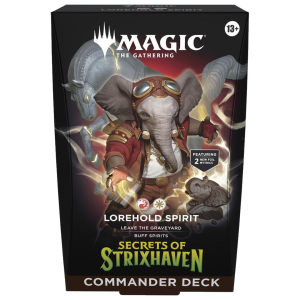
Starter products include ready-to-play decks and simple rules guides. Starter Commander Decks are built specifically to teach Commander, with straightforward strategies and an upgrade path. They are a brilliant first purchase for a group of friends.
Commander precons
Preconstructed Commander decks ship with each major set. They are playable out of the box, include new cards you cannot get elsewhere and are perfect to upgrade over time. Recent precons for releases like Final Fantasy and Marvel Super Heroes have been very popular.
Play Boosters and Collector Boosters
Play Boosters are the standard packs for opening and drafting. Collector Boosters are premium packs packed with foils, alternate-art and borderless cards, aimed at collectors rather than players. Find sealed options in our booster boxes range.
Singles
Once you know which cards your deck needs, buying singles is the efficient route. Staples like Sol Ring, Arcane Signet and Swiftfoot Boots appear in thousands of Commander decks. Browse our MTG singles to fill the gaps in your list.
How to start playing MTG: a five-step path
- Learn on Arena. The free digital tutorial teaches rules interactively.
- Pick a format. Commander for casual groups, Standard or Limited for local events.
- Buy a ready-made deck. A precon or starter deck avoids early deckbuilding stress.
- Play with friends or at a store. Many shops run casual nights and prereleases.
- Upgrade gradually. Swap weaker cards for singles that support your strategy.
Look up card rulings and printings on Scryfall, a fast and free card search engine loved by players.
Building your first MTG deck
When you are ready to build your own, a simple template helps. For a 60-card deck, aim for around 24 lands, 16 to 20 creatures and the rest in spells. For Commander, start with about 36 to 38 lands, ten or so mana-producing artifacts and ramp spells, ten card-draw effects and ten removal spells, then fill the rest with cards that support your commander’s theme.
Watch your mana curve. Too many expensive spells means slow, clunky starts. Plenty of two- and three-mana plays keeps your early turns active.
Key MTG card types to know
- Creature: attacks and blocks, shown with power and toughness.
- Instant: one-shot spell you can cast at almost any time.
- Sorcery: one-shot spell cast only in your main phase.
- Enchantment: a lasting magical effect.
- Artifact: objects and equipment, often colorless.
- Planeswalker: powerful allies with loyalty abilities.
- Land: produces mana.
- Battle: a newer permanent type you attack to unlock its effect.
Collecting MTG: Secret Lair and special finishes
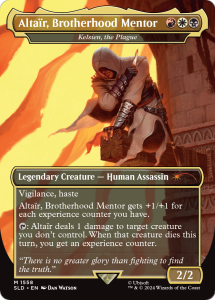
Many people collect MTG cards as much as they play with them. Secret Lair drops offer limited-run cards with unique art, including pop-culture crossovers such as the Monty Python collaboration. Foil, borderless, showcase and serialized versions add extra layers for collectors. If you want a gift for a Magic fan, a special-finish staple is always welcome.
Already own cards you no longer use? Our sell and trade service can turn them into cash or store credit toward new decks. Prefer something unusual? Explore other games in other TCGs too.
MTG terms every beginner hears at the table
MTG players use plenty of shorthand. Learning a few words early makes your first games at a store far less confusing, and it helps when you read deck lists or MTG articles online.
- Tap: turn a card sideways to show it has been used, for example to make mana or to attack.
- Ramp: cards that give you extra mana faster than one land per turn.
- Removal: spells that destroy, exile or neutralize an opponent’s threats.
- Card advantage: having more useful cards available than your opponent.
- The stack: the zone where spells and abilities wait to resolve, last in first out.
- Mulligan: shuffling away a bad opening hand to draw a new one, then putting cards on the bottom.
- Precon: a preconstructed deck sold ready to play.
- Staple: a card that appears in a huge number of decks.
MTG etiquette for new players
Good habits make you a welcome opponent. Announce what you are casting and what it targets, keep your cards and life total clearly visible, and shuffle thoroughly before presenting your deck for a cut. In Commander, a short pre-game chat about how powerful your decks are, sometimes called a “rule zero” talk, helps everyone enjoy the game. Ask questions freely; most MTG players love explaining their favorite cards.
How much does it cost to get into MTG?
The honest answer is: as much or as little as you like. A free Arena account costs nothing. A single precon Commander deck gives you a complete, playable experience in paper, and two precons let you play a full game with a friend. Players who enjoy Standard or Modern often spend more, because competitive decks need specific rare cards in multiples.
The smartest MTG spending habit is simple: decide what you want to play, then buy the singles for that deck rather than opening packs at random. Keep sealed product for the fun of opening, prereleases and gifts. That way your collection always moves toward a goal.
Budget-friendly ways to play Magic
- Share a pair of precons with a friend and swap decks between games.
- Try Pauper, where every card is a common.
- Build Commander decks around inexpensive legendary creatures.
- Join prereleases, where everyone starts on equal footing with fresh packs.
- Trade duplicates for cards you need through a trusted store.
Where to learn more about MTG
Once the basics click, the MTG community has endless resources. The official site publishes set previews, the comprehensive rules and ban list announcements. Card search engines show every printing and ruling for a card. Video content from big events shows how skilled players think through each turn, and local stores often run learn-to-play nights. Pick one or two sources you trust and enjoy the journey; there is always something new to discover in Magic.
MTG FAQ
What does MTG stand for?
It stands for Magic: The Gathering, the trading card game created by Richard Garfield and published by Wizards of the Coast since 1993.
Is MTG hard to learn?
The basics take an evening. Arena’s tutorial and a starter deck are the quickest way in. Mastery takes longer, which is part of the fun.
What is the best format for beginners?
Commander is the most social and forgiving. Prerelease Sealed events are also beginner friendly because everyone builds from fresh packs.
How many cards do I need to play?
Two ready-made decks are enough to start. Commander uses 100-card decks; Standard uses at least 60.
Can I play Magic online for free?
Yes. Magic: The Gathering Arena is free to download and includes a tutorial and starter decks.
Buying MTG online: a practical checklist
Shopping for MTG online is convenient, but a little preparation helps you get exactly what you expect. Use this checklist every time you buy Magic: The Gathering products, whether you are picking up a single card, a sealed box or a premium collection.
Before you order
- Confirm the exact product. Check the set name, card number, language and finish in the listing title and photos.
- Read the condition. Singles are usually listed as Near Mint, Lightly Played or similar. Graded cards show the grading company and grade.
- Check stock status. In-stock items ship sooner than pre-orders, which ship when the product releases.
- Compare value, not just price. A bundle with sleeves, dice or promos may be better value than packs alone.
- Know the policies. Read the shipping, returns and contact information before checkout.
When your order arrives
- Open the parcel carefully and check that everything matches the order.
- Inspect singles and slabs under good light straight away.
- Sleeve and store cards immediately so they keep their condition.
- Contact the store quickly if anything is wrong, with photos of the item and packaging.
How to store and care for MTG
Good storage protects both the look and the value of MTG. Cards are made of layered paper and ink, so heat, light, moisture and pressure all cause damage over time. A few simple habits make a big difference.
- Sleeve first. A soft penny sleeve stops scratches and fingerprints.
- Add rigid protection. Toploaders or semi-rigid holders stop bends for valuable cards.
- Choose the right binder. Side-loading, acid-free binders keep cards secure and easy to view. Avoid ring binders that press into cards.
- Control the environment. Keep cards in a cool, dry room away from windows, radiators and damp basements.
- Store sealed product flat. Boxes and tins last longer stored flat and out of direct light.
- Handle with clean, dry hands. Oils and moisture can mark card surfaces.
You can find sleeves, toploaders, binders and deck boxes in our TCG accessories range.
Useful terms for MTG collectors
- Single: an individual card sold on its own.
- Sealed: unopened product in its original factory wrap.
- Pull rate: how often a type of card appears in packs.
- Chase card: the most wanted card in a set.
- Slab: a card graded and sealed in a hard plastic case.
- NM / LP / MP / HP: condition grades from Near Mint to Heavily Played.
- Reprint: a card printed again in a later product.
- Pre-order: reserving a product before its release date.
Common mistakes to avoid with MTG
Even experienced collectors make avoidable mistakes. Keeping these in mind will save you money and protect your cards.
- Chasing one card through endless packs. If you need a specific card, the single is almost always the cheaper route.
- Skipping protection. A card left unsleeved for a day can pick up a scratch that lowers its value.
- Buying on hype alone. Prices can move quickly after a release. Check several recent sales before paying a premium.
- Ignoring condition notes. Two copies of the same card can differ greatly in value because of wear.
- Storing cards in the wrong place. Attics, garages and sunny windowsills are hard on cardboard.
- Forgetting your goal. A clear plan, such as finishing a set or upgrading a deck, keeps spending focused.
A simple plan to get started with MTG
- Set a goal. Decide whether you are collecting, playing or both.
- Set a monthly budget. Spending a fixed amount keeps the hobby fun and sustainable.
- Mix sealed and singles. Open packs for enjoyment and buy singles for the cards you really need.
- Protect as you go. Sleeves and toploaders cost little compared with the cards they protect.
- Track your collection. A simple list shows what you own and what you still want.
- Sell or trade duplicates. Turn cards you do not need into new additions through a trusted store.
Why shop for MTG at TCG Store USA
TCG Store USA is an online trading card shop for collectors and players. We list Magic: The Gathering products with clear titles and photos, separate in-stock items from pre-orders, and offer a sell and trade service when you want to turn cards into cash or store credit. Browse our singles, booster boxes and graded cards, or contact us with any question about an order or product. For official news, rules and release announcements, visit the official Magic: The Gathering site.
Final thoughts on MTG
MTG rewards curiosity. Start with a ready-made deck, learn the five colors, find a format your friends enjoy and grow your collection one smart purchase at a time. When you are ready to upgrade, our Magic singles and sealed products are here to help you build the deck you have been imagining.