
MTG Standard Decks: 7 Proven Archetypes and the Best Way to Build
MTG Standard decks are the heart of competitive Magic: sixty-card decks built only from the most recent sets, played at Friday Night Magic, in Regional Championships and on MTG Arena. Standard changes more than any other format, which keeps it fresh but can make it confusing. This guide explains how Standard works in November 2026, what the new rotation schedule means, the main deck archetypes and how to build or buy a deck without wasting money.

What makes MTG Standard decks different
Standard is a rotating format. Only cards from a limited window of recent sets are legal, and older sets leave the format on a regular schedule. That keeps the card pool smaller and the format more approachable than Modern or Commander, and it means new sets have a big impact.
The basic deckbuilding rules
- Deck size: at least 60 cards in your main deck.
- Sideboard: up to 15 cards you can swap in between games.
- Copies: no more than four copies of any card except basic lands.
- Life total: 20, played one-on-one.
- Card pool: only cards from Standard-legal sets, minus anything on the banned list.
Those rules sound simple, but they shape everything. Four copies of your best card mean consistency matters, and a fifteen-card sideboard lets you adjust after game one. Good MTG Standard decks are built with both the main deck and sideboard in mind.
Which sets are legal for MTG Standard decks?
At the time of writing (November 2026), Standard includes sets from Wilds of Eldraine (2023) through Reality Fracture (October 2026). That is an unusually large pool, because Wizards skipped the usual fall rotation in 2026 while moving to a new schedule.
- Wilds of Eldraine, The Lost Caverns of Ixalan, Murders at Karlov Manor and Outlaws of Thunder Junction
- Bloomburrow, Duskmourn: House of Horror and Foundations
- Aetherdrift, Tarkir: Dragonstorm, Final Fantasy and Edge of Eternities
- Marvel’s Spider-Man, Avatar: The Last Airbender, Lorwyn Eclipsed and Teenage Mutant Ninja Turtles
- Secrets of Strixhaven, Marvel Super Heroes, The Hobbit and Reality Fracture
A Star Trek set is scheduled for later in November 2026. Always confirm the current list on the official Magic site, because new releases join Standard on their prerelease weekend.
The new Standard rotation schedule
Rotation used to happen each fall with the first set of the autumn. Starting in 2027, rotation moves to the first set of each year. The next rotation is expected in early 2027, when the six oldest sets leave: Wilds of Eldraine, The Lost Caverns of Ixalan, Murders at Karlov Manor, Outlaws of Thunder Junction, Bloomburrow and Duskmourn.
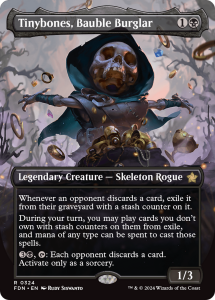
Foundations is a special case. It was designed as a core set that stays in Standard much longer than usual, through at least 2029. That makes Foundations staples some of the safest purchases for MTG Standard decks, because they will not leave with the next rotation.
What rotation means for your wallet
- Cards from rotating sets usually drop in price as rotation approaches, since Standard players sell them.
- Cards from newer sets and Foundations hold their Standard value longer.
- Cards that see Pioneer, Modern or Commander play often keep value after rotation.
If you are building now, lean on cards from sets released in 2025 and 2026, and think twice before paying top dollar for a card that rotates in a few months.
Seven proven archetypes for MTG Standard decks
Specific top decks change week to week, so instead of a tier list that would be stale by the time you read it, here are the archetype families that have defined Standard for years. Almost every successful list fits one of these patterns.
1. Aggro
Aggro decks play cheap, efficient creatures and try to win before the opponent stabilizes. They are often one or two colors, with red and white the classic choices. Aggro is a great first deck because games are fast and decisions are clear, and the cards tend to be cheaper.
2. Midrange
Midrange decks play the best individual cards in their colors: solid creatures, flexible removal and card advantage. They can play defense against aggro and pressure against control. Midrange is often the most popular archetype because it rewards tight play.
3. Control
Control decks answer everything the opponent does with removal, counterspells and sweepers, then win with a few powerful threats. They need patience and good format knowledge, but few decks feel as satisfying when they work.
4. Tempo
Tempo decks play a few cheap threats and protect them with interaction, often in blue. They win by staying one step ahead rather than by out-valuing the opponent.
5. Ramp
Ramp decks accelerate their mana with land and mana-producing cards, then cast huge threats ahead of schedule. Green is the traditional ramp color.
6. Combo
Combo decks assemble two or more cards that win the game or generate an overwhelming advantage. Standard combo decks come and go, and Wizards bans the ones that dominate.
7. Synergy and typal decks
Synergy decks build around a theme such as tokens, artifacts, graveyard recursion or a creature type. Universes Beyond sets have added plenty of support, from Hero and Villain typal in the Marvel sets to Ally typal in Avatar: The Last Airbender.
To see which specific lists are winning right now, check recent tournament results and the decklists published on the official site. Compare a few lists before you buy, because the core of a deck is usually stable while the last few slots change.

The Standard banned list
Bans shape MTG Standard decks as much as new sets do. As of the most recent list we checked (summer 2026), banned Standard cards included Heartfire Hero, Monstrous Rage, Up the Beanstalk, Cori-Steel Cutter, Vivi Ornitier, Screaming Nemesis, Badgermole Cub, Stormchaser’s Talent and several others. Bans can change at any announcement, so check the official banned and restricted page before you build or sell.
How to build MTG Standard decks step by step
- Pick an archetype you enjoy. You will play it better and practice more.
- Find three recent lists. Note the cards that appear in all three; that is your core.
- Buy the core first. Four-ofs and lands matter more than flex slots.
- Get your mana right. Dual lands make a two-color deck far more consistent.
- Build the sideboard. Plan answers for the top two or three decks you expect to face.
- Test on MTG Arena or with friends. Adjust before spending on the last few cards.
Buying singles is almost always the most efficient way to build a competitive deck. Our MTG singles section lets you pick exactly the cards you need instead of opening packs and hoping.
Building MTG Standard decks on a budget
Standard does not have to be expensive. Aggro decks usually cost less than control or midrange, and many strong commons and uncommons make the cut. A few budget tips:
- Start with a mono-colored deck so you avoid expensive dual lands.
- Prioritize cards from Foundations and the newest sets, since they will stay legal longest.
- Upgrade gradually, replacing the weakest cards first.
- Trade in cards you no longer use through our sell and trade page.
Opening a booster box with friends can also kick-start a collection, especially for a set full of Standard playables, though singles remain the fastest route to a specific list.

Preparing for a Standard event
Once your deck is ready, a little preparation helps you enjoy your first event. Sleeve all sixty main-deck cards and fifteen sideboard cards in matching sleeves, bring a deck box and dice, and write your decklist in advance if the event requires one. Our accessories page covers the basics.
Practice sideboarding before the event: decide which cards come out against aggro and which come in against control. Knowing your plan saves time and reduces mistakes between games.
Standard on MTG Arena
MTG Arena is a great place to test MTG Standard decks before buying paper cards. The digital card pool matches paper Standard, though occasional digital-only cards and best-of-one queues mean the Arena metagame can look a little different. Many players use Arena to practice and paper for local events.
If you collect alongside playing, our collections and graded cards categories offer a different way to enjoy the same sets.
Should you buy precon MTG Standard decks?
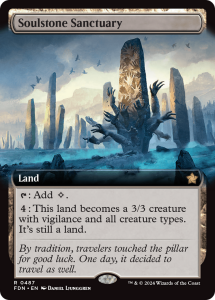
Wizards regularly releases ready-to-play products such as Starter Kits, Jumpstart and Challenger-style decks. These are not the same as tournament-tuned MTG Standard decks, but they can be a cheap starting point. Treat a precon as a parts kit: keep the useful rares and lands, then add singles to finish the list.
Precon versus singles
- Precon: cheaper up front, instantly playable, but rarely competitive without upgrades.
- Singles: more expensive at first, but you buy only the cards that matter for the MTG Standard decks you want.
- Booster boxes: fun and good for drafting, but a slow way to build a specific list.
Future-proofing your MTG Standard decks
With rotation coming in early 2027, smart builders plan ahead. Cards from Foundations will survive, as will everything from Aetherdrift onward. If you are building MTG Standard decks today, count how many of your cards come from the rotating sets. A deck built mostly from 2025 and 2026 cards will need only minor changes after rotation, while a deck relying on Bloomburrow or Duskmourn staples may need a rebuild.
A good habit is to track MTG Standard decks across a few weeks of results. When the same new cards keep appearing, they are likely to stay relevant after rotation, and buying them early is usually cheaper than waiting until everyone needs them.
Common mistakes with MTG Standard decks
- Too many colors: three-color MTG Standard decks need strong mana; most new players do better in one or two colors.
- Too few lands: most MTG Standard decks run 22 to 26 lands depending on the curve; cutting lands to fit spells causes more losses than it wins.
- Ignoring the sideboard: fifteen well-chosen cards can swing a bad matchup.
- Chasing last week’s winner: the best deck often has a target on its back, so a well-practiced alternative can be the smarter pick.
- Forgetting rotation: check release years before you invest in expensive rares.
MTG Standard decks FAQ
When is the next Standard rotation?
The next rotation is expected in early 2027 with the first set of the year, when Wilds of Eldraine through Duskmourn leave Standard. Confirm the exact date on the official site.
Are Universes Beyond sets legal in Standard?
Yes. Since Final Fantasy in 2025, main-set Universes Beyond cards are Standard-legal, including Marvel’s Spider-Man, Avatar, Marvel Super Heroes and The Hobbit.
How many cards are in a Standard deck?
At least 60 cards in the main deck, with up to 15 in the sideboard and no more than four copies of any nonbasic card.
What is the best Standard deck right now?
The top decks change frequently. At the time of writing (November 2026), check recent tournament results and official decklists for the current leaders.
Is Standard good for beginners?
Yes. The smaller card pool makes it easier to learn than older formats, and aggro decks are a friendly, affordable starting point. If you have questions, contact us.
Buying MTG Standard decks online: a practical checklist
Shopping for MTG Standard decks online is convenient, but a little preparation helps you get exactly what you expect. Use this checklist every time you buy Magic: The Gathering products, whether you are picking up a single card, a sealed box or a premium collection.
Before you order
- Confirm the exact product. Check the set name, card number, language and finish in the listing title and photos.
- Read the condition. Singles are usually listed as Near Mint, Lightly Played or similar. Graded cards show the grading company and grade.
- Check stock status. In-stock items ship sooner than pre-orders, which ship when the product releases.
- Compare value, not just price. A bundle with sleeves, dice or promos may be better value than packs alone.
- Know the policies. Read the shipping, returns and contact information before checkout.
When your order arrives
- Open the parcel carefully and check that everything matches the order.
- Inspect singles and slabs under good light straight away.
- Sleeve and store cards immediately so they keep their condition.
- Contact the store quickly if anything is wrong, with photos of the item and packaging.
How to store and care for MTG Standard decks
Good storage protects both the look and the value of MTG Standard decks. Cards are made of layered paper and ink, so heat, light, moisture and pressure all cause damage over time. A few simple habits make a big difference.
- Sleeve first. A soft penny sleeve stops scratches and fingerprints.
- Add rigid protection. Toploaders or semi-rigid holders stop bends for valuable cards.
- Choose the right binder. Side-loading, acid-free binders keep cards secure and easy to view. Avoid ring binders that press into cards.
- Control the environment. Keep cards in a cool, dry room away from windows, radiators and damp basements.
- Store sealed product flat. Boxes and tins last longer stored flat and out of direct light.
- Handle with clean, dry hands. Oils and moisture can mark card surfaces.
You can find sleeves, toploaders, binders and deck boxes in our TCG accessories range.
Useful terms for MTG Standard decks collectors
- Single: an individual card sold on its own.
- Sealed: unopened product in its original factory wrap.
- Pull rate: how often a type of card appears in packs.
- Chase card: the most wanted card in a set.
- Slab: a card graded and sealed in a hard plastic case.
- NM / LP / MP / HP: condition grades from Near Mint to Heavily Played.
- Reprint: a card printed again in a later product.
- Pre-order: reserving a product before its release date.
Common mistakes to avoid with MTG Standard decks
Even experienced collectors make avoidable mistakes. Keeping these in mind will save you money and protect your cards.
- Chasing one card through endless packs. If you need a specific card, the single is almost always the cheaper route.
- Skipping protection. A card left unsleeved for a day can pick up a scratch that lowers its value.
- Buying on hype alone. Prices can move quickly after a release. Check several recent sales before paying a premium.
- Ignoring condition notes. Two copies of the same card can differ greatly in value because of wear.
- Storing cards in the wrong place. Attics, garages and sunny windowsills are hard on cardboard.
- Forgetting your goal. A clear plan, such as finishing a set or upgrading a deck, keeps spending focused.
A simple plan to get started with MTG Standard decks
- Set a goal. Decide whether you are collecting, playing or both.
- Set a monthly budget. Spending a fixed amount keeps the hobby fun and sustainable.
- Mix sealed and singles. Open packs for enjoyment and buy singles for the cards you really need.
- Protect as you go. Sleeves and toploaders cost little compared with the cards they protect.
- Track your collection. A simple list shows what you own and what you still want.
- Sell or trade duplicates. Turn cards you do not need into new additions through a trusted store.
Why shop for MTG Standard decks at TCG Store USA
TCG Store USA is an online trading card shop for collectors and players. We list Magic: The Gathering products with clear titles and photos, separate in-stock items from pre-orders, and offer a sell and trade service when you want to turn cards into cash or store credit. Browse our singles, booster boxes and graded cards, or contact us with any question about an order or product. For official news, rules and release announcements, visit the official Magic: The Gathering site.
Final thoughts on MTG Standard decks
MTG Standard decks reward players who stay current: know which sets are legal, understand the new rotation schedule and pick an archetype you enjoy. Buy your core cards as singles, prioritize sets that will stay legal longest, and test before you finish the list. Explore our full shop for singles, sealed product and accessories for your next deck.