MTG Forge: 9 Essential Ways to Playtest Smarter for Free in 2026
MTG Forge is a free, open-source rules engine for Magic: The Gathering that lets you play against computer opponents on your own machine. It has been around for many years and is maintained by a volunteer community. Players use it to test decks, practice formats like Draft and Commander, and explore a single-player Adventure mode. This guide explains what MTG Forge is, its main features, how people use it to playtest, and how it fits alongside collecting real cards.
What is MTG Forge?
MTG Forge, usually just called Forge, describes itself as an unofficial rules engine for Magic. It is written in Java and released under the GPL-3.0 open-source license, with its source code hosted on GitHub. Because it is unofficial, it is not made, endorsed or supported by Wizards of the Coast. It is a fan project built by volunteers who implement card scripts and AI logic.
The project’s home is the Card-Forge repository on GitHub, which also links to its project website and wiki. If you are curious, that is the place to read documentation and release notes rather than relying on third-party mirrors.
How it differs from official digital Magic
Official digital games such as MTG Arena and Magic Online are run by Wizards and have their own collections, economies and online matchmaking. MTG Forge is different: it runs locally, focuses on playing against AI, and lets you build decks from a huge pool of cards without collecting them in-game. It does not replace official products, but it fills a niche for solo practice and experimentation.
Key features of MTG Forge
The feature list is broad for a volunteer project. Here are the highlights most players care about.
- AI opponents. Play against computer players in one-on-one duels or multiplayer games.
- Limited formats. Simulate Booster Draft, Sealed and Cube drafts against AI drafters.
- Commander support. Build Commander decks and play multiplayer games with AI opponents.
- Adventure mode. A single-player RPG-style mode with an overworld map, duels and card rewards.
- Quest and Gauntlet modes. Progression-based challenges that build a collection over time.
- Deck editor. Filter and search the card pool, import decklists and save variations.
- Puzzle mode. Solve set board states to sharpen rules knowledge.
- Cross-platform. Desktop versions for Windows, macOS and Linux, plus an Android version.
System basics
The desktop version requires a recent Java runtime, and the project notes that the Android build needs a fairly capable device with plenty of memory. Card images are typically fetched on first launch. Check the official project page for current requirements, because they change as the engine grows.
How players use MTG Forge to playtest
Most people do not use MTG Forge as a replacement for real games. They use it as a lab. Here are nine practical ways players get value from it.
1. Goldfishing a new deck
“Goldfishing” means playing a deck without meaningful opposition to see how it draws. Forge lets you run dozens of opening hands and early turns quickly, so you can judge land counts and curve before buying a single card.
2. Testing Commander ideas
Building a Commander deck is a big investment. With MTG Forge you can try a commander against several AI opponents, see whether your ramp and draw feel right, and swap cards freely. It will not perfectly mimic your playgroup, but it reveals clunky draws.
3. Practicing Draft
Draft against AI drafters to learn a set’s archetypes before a prerelease or a draft night. You will not learn human drafting tendencies, but you will get used to picking signals and building a 40-card deck.
4. Learning rules interactions
Forge’s engine handles the stack, triggers and priority. Watching how complex interactions resolve can help newer players understand the rules, though the official Comprehensive Rules remain the final word.
5. Comparing card choices
Not sure whether to run a creature or a removal spell in a slot? Play both versions several times. Forge makes A/B testing easy.
6. Trying a format before committing
Curious about Pauper, Modern or Cube? You can sample formats in MTG Forge to see whether you enjoy them before you buy into a paper deck.
7. Exploring Adventure mode for fun
Not every session needs to be practice. Adventure mode turns Magic into a light RPG where you explore, earn cards and build up a deck, which many players find relaxing.
8. Studying sideboard plans
For 60-card formats, you can set up specific matchups against AI decks and practice your sideboarding decisions.
9. Preparing for paper events
Before a store event, use Forge to review your deck’s lines, then play real games with friends. Combining both gives you the best preparation, and it keeps your practice grounded in how real opponents think rather than how the AI behaves.
Limitations of MTG Forge
A balanced view matters. The AI in MTG Forge has improved over the years, but it is not a human. It can make odd plays, misjudge combat or ignore complex combos. That means results against it are useful for testing consistency and mana, but less useful for judging matchups against skilled players.
Card implementation also takes time. Newly released cards may not be available immediately, and rare edge cases can behave unexpectedly. Volunteers fix bugs as they are reported, so check the project’s issue tracker or release notes if something looks wrong.
Licensing and legal context
Forge’s code is open source, but Magic’s cards, names and art are owned by Wizards of the Coast. The project is unofficial. If you are unsure about anything related to use or distribution, read the project’s own documentation and Wizards’ fan content policies. We recommend getting the software only from the official project page.
MTG Forge versus other tools
Several free tools exist for testing Magic decks. Some focus on online play with other humans, using manual rules or partial rules enforcement. MTG Forge stands out for its solo play against AI and its wide range of modes. Many players use Forge for solo testing and a separate tool or video calls with friends for human games, while relying on sites like Scryfall for card searches and Oracle text.
From MTG Forge to real cards
Testing is only half the fun. Once you have found a list you love in MTG Forge, building it in paper gives you the full experience of shuffling up with friends. A smart approach is to buy the core of your deck as singles, rather than opening packs for specific cards.
- Start with staples like Sol Ring, Arcane Signet and Swiftfoot Boots from MTG singles.
- Look at preconstructed Commander decks as a base, then upgrade with tested cards.
- Browse booster boxes if you enjoyed drafting a set in Forge and want to draft it for real.
- Explore collections for a quick way to build a broader card pool.
Collecting what you tested
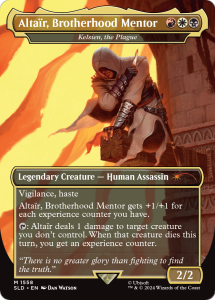
Many players discover favorite cards through testing and then seek out special versions, such as Secret Lair drops or showcase frames. If a card became your deck’s MVP in MTG Forge, a premium paper copy can be a satisfying reward. For high-value pieces, graded cards offer protection and verified condition.

Upgrading your play space
Paper Magic needs a little gear. Sleeves, deck boxes and playmats from accessories protect your cards. If you have cards you no longer use after testing a new list, consider trading them in through our sell and trade page.
A sample MTG Forge testing session
Here is how a focused hour in MTG Forge might look for a Commander player. Start by importing your decklist into the deck editor. Then set up a four-player game against three AI decks of different styles. Play two full games, writing down when you hit your third, fourth and fifth land drops and how often you had nothing to do with your mana.
Next, switch to goldfishing. Draw ten opening hands and note how many you would keep. If more than three feel like mulligans, your mana or curve probably needs work. Finally, swap in two or three candidate cards and repeat. In one hour you will have far more data than a single night of paper play would give you.
Testing a Limited set
For a new set, run a few AI drafts in MTG Forge before your local prerelease. Track which colors felt deep and which commons kept performing. Even if the AI drafts differently from people, you will learn the set’s mechanics and common combat tricks, which is a real edge on draft night.
Testing a 60-card deck
For Standard, Pioneer or Modern decks, play best-of-three matches against AI versions of popular archetypes. Focus on your mulligan decisions and your sideboarding plan. MTG Forge will not replicate a tournament field perfectly, but it gives you repetitions on the mechanics of your own deck.
Tips for getting the most out of MTG Forge
- Keep a test log. Note opening hands, mulligans and turn-by-turn issues.
- Change one thing at a time. Swap a few cards, then retest, so you know what made the difference.
- Use multiple AI decks. Test against aggressive, midrange and control opponents.
- Do not overfit to the AI. If a card only wins against the computer, reconsider it.
- Report bugs politely. Volunteer projects improve when users share clear reports.
Who MTG Forge is best for
MTG Forge suits several kinds of players. Deckbuilders who love brewing get a fast way to try ideas. Busy players who cannot attend weekly events get extra repetitions at home. Newer players get a low-pressure way to learn how turns, phases and the stack work. And lapsed players returning to the hobby can catch up on newer mechanics before spending money on paper cards.
It is less ideal for players who mainly want competitive online matches against people, since its strength is solo play. In that case, official clients or playing with friends over video may suit you better, with MTG Forge as a side tool for quick tests.
Community and contributions
The project has a long history, with contributors adding new sets and improving the AI release after release. That steady effort is why the card pool is so large and why so many modes exist today.
Because MTG Forge is open source, anyone can contribute. Developers write code, card scripters add new sets, and players report bugs. If you enjoy the project, reading the contribution guidelines on the official repository is a good way to give back.
MTG Forge FAQ
Is MTG Forge free?
Yes. MTG Forge is free and open source under the GPL-3.0 license, maintained by volunteers.
Is MTG Forge official?
No. It is an unofficial fan project and is not made or endorsed by Wizards of the Coast.
Can I play Commander in MTG Forge?
Yes. Forge supports Commander with AI opponents, including multiplayer games.
Does MTG Forge work on phones?
There is an Android version in addition to desktop versions for Windows, macOS and Linux. Check the official project page for current requirements.
Where should I get MTG Forge?
Use the official Card-Forge project page on GitHub, which links to releases and documentation. Avoid unofficial mirrors.
Buying MTG Forge online: a practical checklist
Shopping for MTG Forge online is convenient, but a little preparation helps you get exactly what you expect. Use this checklist every time you buy Magic: The Gathering products, whether you are picking up a single card, a sealed box or a premium collection.
Before you order
- Confirm the exact product. Check the set name, card number, language and finish in the listing title and photos.
- Read the condition. Singles are usually listed as Near Mint, Lightly Played or similar. Graded cards show the grading company and grade.
- Check stock status. In-stock items ship sooner than pre-orders, which ship when the product releases.
- Compare value, not just price. A bundle with sleeves, dice or promos may be better value than packs alone.
- Know the policies. Read the shipping, returns and contact information before checkout.
When your order arrives
- Open the parcel carefully and check that everything matches the order.
- Inspect singles and slabs under good light straight away.
- Sleeve and store cards immediately so they keep their condition.
- Contact the store quickly if anything is wrong, with photos of the item and packaging.
How to store and care for MTG Forge
Good storage protects both the look and the value of MTG Forge. Cards are made of layered paper and ink, so heat, light, moisture and pressure all cause damage over time. A few simple habits make a big difference.
- Sleeve first. A soft penny sleeve stops scratches and fingerprints.
- Add rigid protection. Toploaders or semi-rigid holders stop bends for valuable cards.
- Choose the right binder. Side-loading, acid-free binders keep cards secure and easy to view. Avoid ring binders that press into cards.
- Control the environment. Keep cards in a cool, dry room away from windows, radiators and damp basements.
- Store sealed product flat. Boxes and tins last longer stored flat and out of direct light.
- Handle with clean, dry hands. Oils and moisture can mark card surfaces.
You can find sleeves, toploaders, binders and deck boxes in our TCG accessories range.
Useful terms for MTG Forge collectors
- Single: an individual card sold on its own.
- Sealed: unopened product in its original factory wrap.
- Pull rate: how often a type of card appears in packs.
- Chase card: the most wanted card in a set.
- Slab: a card graded and sealed in a hard plastic case.
- NM / LP / MP / HP: condition grades from Near Mint to Heavily Played.
- Reprint: a card printed again in a later product.
- Pre-order: reserving a product before its release date.
Common mistakes to avoid with MTG Forge
Even experienced collectors make avoidable mistakes. Keeping these in mind will save you money and protect your cards.
- Chasing one card through endless packs. If you need a specific card, the single is almost always the cheaper route.
- Skipping protection. A card left unsleeved for a day can pick up a scratch that lowers its value.
- Buying on hype alone. Prices can move quickly after a release. Check several recent sales before paying a premium.
- Ignoring condition notes. Two copies of the same card can differ greatly in value because of wear.
- Storing cards in the wrong place. Attics, garages and sunny windowsills are hard on cardboard.
- Forgetting your goal. A clear plan, such as finishing a set or upgrading a deck, keeps spending focused.
A simple plan to get started with MTG Forge
- Set a goal. Decide whether you are collecting, playing or both.
- Set a monthly budget. Spending a fixed amount keeps the hobby fun and sustainable.
- Mix sealed and singles. Open packs for enjoyment and buy singles for the cards you really need.
- Protect as you go. Sleeves and toploaders cost little compared with the cards they protect.
- Track your collection. A simple list shows what you own and what you still want.
- Sell or trade duplicates. Turn cards you do not need into new additions through a trusted store.
Why shop for MTG Forge at TCG Store USA
TCG Store USA is an online trading card shop for collectors and players. We list Magic: The Gathering products with clear titles and photos, separate in-stock items from pre-orders, and offer a sell and trade service when you want to turn cards into cash or store credit. Browse our singles, booster boxes and graded cards, or contact us with any question about an order or product. For official news, rules and release announcements, visit the official Magic: The Gathering site.
Final thoughts on MTG Forge
MTG Forge is a powerful free tool for solo testing, drafting practice and casual Adventure play. It has limits, especially its AI, but used as a lab it can save you time and money before you build in paper. When a list clicks, bring it to life with real cards from our shop and enjoy Magic the way it is best played: across the table from friends.