MTG Decks: 9 Best Deck Types and an Easy Guide to Building Your Own
MTG decks come in more shapes than most new players expect. A 40-card draft pile, a tuned 60-card Standard list and a 100-card Commander deck are all “decks,” yet each follows different rules and rewards different choices. This guide walks through every major deck type across formats, the deckbuilding basics that apply to all of them, and the smartest ways to buy or upgrade your next deck without wasting money.
What makes MTG decks different from one another
The single biggest factor that shapes a deck is the format it is built for. A format sets the minimum deck size, how many copies of a card you may run, which sets are legal and which cards are banned. Change the format and the same pile of cards can go from legal and competitive to completely unplayable.
The second factor is purpose. Some decks exist to win tournaments, some to teach a friend the game, and some to show off a favorite creature type or character. Knowing why you want a deck before you buy or build it saves a lot of trial and error later.
- Constructed decks are built in advance from cards you own, such as Standard, Pioneer, Modern or Commander.
- Limited decks are built on the spot from packs you open, as in Draft and Sealed.
- Preconstructed decks arrive ready to play straight out of the box.
- Casual decks follow whatever house rules your playgroup agrees on.
The main types of MTG decks by format
Commander decks (100 cards, singleton)
Commander is the most popular way to play Magic today. You choose a legendary creature as your commander, then build a 99-card deck around it using only cards that match its color identity, with no more than one copy of any card except basic lands. Games are usually four-player free-for-alls with 40 starting life, so decks lean toward big, splashy plays and social interaction.
Because playgroups vary so much, Wizards of the Coast introduced a bracket system to help players describe how powerful a Commander deck is before a game starts. Brackets and the related Game Changers list are updated from time to time, so check the official Magic site for the current version at the time of writing (November 2026).
Standard decks (60 cards, rotating)
Standard uses only recent expansion sets, and older sets rotate out on a regular schedule. Decks must contain at least 60 cards with no more than four copies of any card other than basic lands, plus an optional sideboard of up to 15 cards. Standard is the format most closely tied to new releases, which makes it the natural home for players who enjoy a changing metagame.
Pioneer and Modern decks
Pioneer and Modern use the same 60-card, four-copy rules as Standard but are non-rotating. Pioneer begins with Return to Ravnica and later sets, while Modern reaches back further to Eighth Edition. These MTG decks hold their value well because cards stay legal for years, but they also tend to cost more to assemble, since key staples are in demand from many players.
Limited decks (40 cards)
In Draft and Sealed you build a deck from booster packs opened at the event. The minimum is 40 cards, and you may play as many copies of a card as you open. A typical Limited build is around 17 lands and 23 spells, with a strong focus on creatures and removal. Play Boosters, introduced in 2024, are the standard pack for both Draft and Sealed.
Casual and kitchen-table decks
Plenty of players never set foot in a tournament. Kitchen-table MTG decks can mix any cards your group allows, and many groups use house rules such as “no infinite combos” or “only cards from this one theme.” These decks are perfect for using favorite cards that are not strong enough for competitive play.
Preconstructed MTG decks explained
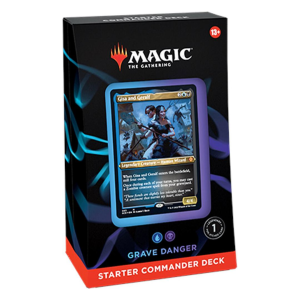
A preconstructed deck, or precon, is a complete, legal deck sold as a single sealed product. Precons are the fastest way to start playing, and they are often excellent value because the card list includes several new cards you cannot open in regular packs.
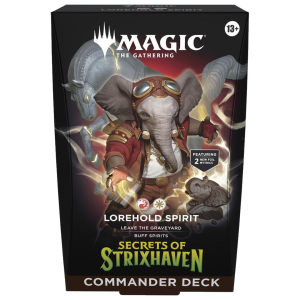
Commander precons
Most major releases now come with a set of Commander decks themed around the expansion. In 2026 alone, sets such as Secrets of Strixhaven, Marvel Super Heroes and Reality Fracture all launched alongside Commander products, and Universes Beyond releases like Final Fantasy brought fan-favorite characters into the format. Each precon includes a face commander, alternative legendary options and a ready-made 100-card list.
Starter Commander decks
Starter Commander decks are designed for brand-new players. They use simpler cards, clear themes and straightforward game plans, so a beginner can learn the format without reading dozens of complex cards. They are also a cheap way to add an extra deck to lend to friends on game night.
Welcome decks, theme decks and Jumpstart
Welcome decks are small single-color decks often given away at participating stores to introduce new players to the game. Theme decks, a Standard-focused product line introduced with Lorwyn Eclipsed in early 2026, give players a ready-to-play 60-card deck tied to a recent set. Jumpstart packs are half-decks you shuffle together with another pack to create a random two-theme deck in seconds.
Common archetypes found in MTG decks
Whatever the format, most MTG decks fall into a handful of broad strategies. Recognizing them helps you understand why a list contains the cards it does and how it wants to win.
- Aggro: cheap, efficient creatures that try to win before the opponent stabilizes.
- Midrange: sturdy threats and flexible removal that trade well against everything.
- Control: counterspells, removal and card draw that grind the opponent out, then win with a few finishers.
- Combo: two or more cards that create an overwhelming or game-winning effect together.
- Ramp: extra mana sources that let you cast huge spells well ahead of schedule.
- Tempo: cheap threats backed by disruption that keeps the opponent off balance.
- Tribal or typal: decks built around one creature type, such as Elves, Dragons or Angels.
- Tokens: wide boards of small creatures pumped up by anthem effects.
- Graveyard: strategies that fill the graveyard and reuse cards from it.
Deckbuilding basics that apply to all MTG decks
Get the land count right
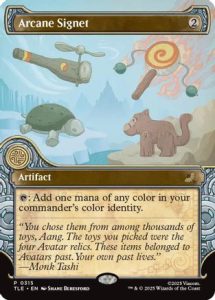
Mana problems lose more games with MTG decks than bad card choices do. As a starting point, play about 17 lands in a 40-card Limited deck, 22 to 26 in a 60-card Constructed deck depending on your curve, and roughly 36 to 38 lands in Commander, counting mana rocks such as Sol Ring and Arcane Signet as partial replacements. Adjust from there based on how expensive your spells are.
Build a smooth mana curve
Your mana curve is the spread of spell costs in the deck. A healthy curve has plenty of plays at two and three mana so you can use your mana every turn. Aggressive decks keep the curve low, while ramp and control decks can afford more expensive cards because they plan to survive into the late game.
Balance card roles
Good decks have a mix of jobs covered. A popular Commander template is roughly ten ramp pieces, ten card draw effects, eight to ten targeted removal spells, two or three board wipes and a solid core of cards that advance your theme. Constructed decks are tighter, but the same principle applies: every card should do something your plan needs.
Choose colors with purpose
Each color in Magic has strengths. White excels at small creatures and protection, blue at card draw and counterspells, black at removal and recursion, red at direct damage and speed, and green at ramp and large creatures. Two-color decks are the easiest to build reliably; adding a third color needs dual lands or fixing to keep your mana consistent.
Plan your sideboard
In 60-card formats, your sideboard lets you swap cards between games of a match. Use it for answers to specific threats such as graveyard decks, artifact strategies or fliers. Commander has no sideboard in most casual play, so build in flexible answers instead.
How to upgrade a precon into a stronger deck
Upgrading a precon is one of the most satisfying parts of the hobby. You start with a working list and improve it a few cards at a time, learning why each change matters.
- Play it as-is first. A handful of games shows you which cards overperform and which sit in your hand.
- Fix the mana. Swap tapped lands for dual lands that enter untapped and add efficient mana rocks.
- Add interaction. Precons often run light on removal; a few cheap answers make a big difference.
- Protect your commander. Cards like Swiftfoot Boots and Heroic Intervention keep your key pieces alive.
- Sharpen the theme. Replace off-plan “good stuff” with cards that directly support your strategy.
- Cut in pairs. Change a few cards at a time so you can see what each upgrade actually does.
Buying the exact singles you need is far cheaper than opening packs and hoping. Our MTG singles range covers staples and newer cards, and you can browse sealed products in booster boxes if you also enjoy opening packs for your collection.
Buying MTG decks: precon, singles or complete deck?
There are three common ways to get new MTG decks, and each suits a different player.
- Sealed precons are the best value for beginners and casual players. You get a full deck, often with exclusive new cards, at a predictable cost.
- Building from singles gives you total control. It is ideal when you already know your list or want a specific competitive deck.
- Complete or pre-built decks from other collectors can be a shortcut, but always check the card list, condition and whether the cards are authentic.
Looking for bulk cards to fill out a casual build? Check our card collections, which can be a fun way to pick up playables in volume. If you enjoy surprises, mystery boxes add a little excitement to deckbuilding. And if your old decks are gathering dust, our sell and trade service can turn them into cash or store credit toward new MTG decks.
What to check before you buy
- The format the deck is built for, and whether any cards are banned in it.
- The full decklist, so you know which key cards are included.
- Whether the product is sealed, opened but complete, or a custom build.
- The condition of any singles if you plan to keep them long-term.
Testing and tuning your MTG decks
MTG decks are never really finished. The best players treat every list as a draft that improves with each game. Here is a simple routine that works for every format.
- Goldfish it. Shuffle up and play several turns alone to check your openings and mana.
- Take notes. Write down cards that felt dead or games where you ran out of things to do.
- Play different opponents. A deck that beats one friend may struggle against another strategy.
- Use search tools. Sites like Scryfall make it easy to find cards by color, type and effect when you need a replacement.
- Check the rules. The official Magic: The Gathering site lists formats, ban lists and Commander brackets.
Protect your work, too. Good sleeves and a sturdy deck box from our accessories range keep cards shuffling smoothly and stop wear on your favorites. You can also browse graded cards if you want a showpiece version of a deck’s signature card.
Sample budgets for MTG decks
Thinking in tiers helps you decide what to buy first. These are rough guides for planning, not price quotes, because card prices change constantly.
- Entry tier: one precon or Starter Commander deck, played as-is. This is enough for months of casual MTG decks fun.
- Upgrade tier: the same precon plus ten to fifteen targeted singles, usually better lands, removal and protection.
- Enthusiast tier: several MTG decks across formats, each tuned with the staples that matter most.
- Competitive tier: a single high-end list for Modern, Pioneer or high-power Commander, bought card by card.
Choosing your first of many MTG decks
Most players end up owning several MTG decks, so do not worry about picking the perfect first one. Instead, pick a theme that excites you. If you love dragons, grab a red dragon deck; if you like drawing cards and outsmarting opponents, try blue. Enthusiasm keeps you playing long enough to learn the game properly.
A good test is to read the face commander or key cards and imagine your best turn. If that turn sounds fun, the deck is probably a good match. Players who build MTG decks around what they enjoy tend to stick with the hobby far longer than those who copy the strongest list without caring about it.
Mistakes new players make with MTG decks
- Running too few lands because spells feel more exciting.
- Adding a third or fourth color without enough mana fixing.
- Filling MTG decks with expensive cards and nothing to do in the early turns.
- Ignoring removal, so one strong opposing creature runs away with the game.
- Bringing a high-power deck to a casual table without talking about brackets first.
Keeping a rotation of MTG decks
Once you own a few MTG decks, rotate them so each one stays fresh. Many players keep one casual deck for new friends, one upgraded favorite and one experimental build. Labeling deck boxes and keeping a simple list of each decklist makes it easy to swap cards between MTG decks without losing track of where your staples went.
MTG decks FAQ
How many cards are in MTG decks?
It depends on the format. Limited decks need at least 40 cards, Standard, Pioneer and Modern need at least 60, and Commander decks are exactly 100 including the commander.
What are the best MTG decks for beginners?
Starter Commander decks and regular Commander precons are great first purchases because they are ready to play and easy to upgrade. If you prefer one-on-one games, a Standard theme deck or Welcome deck is a gentle introduction.
Can I play a precon at my local store?
Yes. Most stores run casual Commander nights where precons are welcome. For Standard events, check that every card in your deck is still legal, since sets rotate over time.
How much does it cost to build MTG decks?
Costs vary hugely. A precon or budget build is affordable, while competitive Modern or high-power Commander lists can be expensive because of in-demand staples. Set a budget and upgrade gradually.
Should I build or buy my first deck?
Buy first, build second. A precon teaches you how a working deck is structured, and that knowledge makes your first scratch-built deck far stronger.
Ready to start? Browse the full TCG Store USA shop for precons, singles and accessories, or contact our team if you want help finding a card for your build.
Buying MTG decks online: a practical checklist
Shopping for MTG decks online is convenient, but a little preparation helps you get exactly what you expect. Use this checklist every time you buy Magic: The Gathering products, whether you are picking up a single card, a sealed box or a premium collection.
Before you order
- Confirm the exact product. Check the set name, card number, language and finish in the listing title and photos.
- Read the condition. Singles are usually listed as Near Mint, Lightly Played or similar. Graded cards show the grading company and grade.
- Check stock status. In-stock items ship sooner than pre-orders, which ship when the product releases.
- Compare value, not just price. A bundle with sleeves, dice or promos may be better value than packs alone.
- Know the policies. Read the shipping, returns and contact information before checkout.
When your order arrives
- Open the parcel carefully and check that everything matches the order.
- Inspect singles and slabs under good light straight away.
- Sleeve and store cards immediately so they keep their condition.
- Contact the store quickly if anything is wrong, with photos of the item and packaging.
How to store and care for MTG decks
Good storage protects both the look and the value of MTG decks. Cards are made of layered paper and ink, so heat, light, moisture and pressure all cause damage over time. A few simple habits make a big difference.
- Sleeve first. A soft penny sleeve stops scratches and fingerprints.
- Add rigid protection. Toploaders or semi-rigid holders stop bends for valuable cards.
- Choose the right binder. Side-loading, acid-free binders keep cards secure and easy to view. Avoid ring binders that press into cards.
- Control the environment. Keep cards in a cool, dry room away from windows, radiators and damp basements.
- Store sealed product flat. Boxes and tins last longer stored flat and out of direct light.
- Handle with clean, dry hands. Oils and moisture can mark card surfaces.
You can find sleeves, toploaders, binders and deck boxes in our TCG accessories range.
Useful terms for MTG decks collectors
- Single: an individual card sold on its own.
- Sealed: unopened product in its original factory wrap.
- Pull rate: how often a type of card appears in packs.
- Chase card: the most wanted card in a set.
- Slab: a card graded and sealed in a hard plastic case.
- NM / LP / MP / HP: condition grades from Near Mint to Heavily Played.
- Reprint: a card printed again in a later product.
- Pre-order: reserving a product before its release date.
Common mistakes to avoid with MTG decks
Even experienced collectors make avoidable mistakes. Keeping these in mind will save you money and protect your cards.
- Chasing one card through endless packs. If you need a specific card, the single is almost always the cheaper route.
- Skipping protection. A card left unsleeved for a day can pick up a scratch that lowers its value.
- Buying on hype alone. Prices can move quickly after a release. Check several recent sales before paying a premium.
- Ignoring condition notes. Two copies of the same card can differ greatly in value because of wear.
- Storing cards in the wrong place. Attics, garages and sunny windowsills are hard on cardboard.
- Forgetting your goal. A clear plan, such as finishing a set or upgrading a deck, keeps spending focused.
A simple plan to get started with MTG decks
- Set a goal. Decide whether you are collecting, playing or both.
- Set a monthly budget. Spending a fixed amount keeps the hobby fun and sustainable.
- Mix sealed and singles. Open packs for enjoyment and buy singles for the cards you really need.
- Protect as you go. Sleeves and toploaders cost little compared with the cards they protect.
- Track your collection. A simple list shows what you own and what you still want.
- Sell or trade duplicates. Turn cards you do not need into new additions through a trusted store.
Why shop for MTG decks at TCG Store USA
TCG Store USA is an online trading card shop for collectors and players. We list Magic: The Gathering products with clear titles and photos, separate in-stock items from pre-orders, and offer a sell and trade service when you want to turn cards into cash or store credit. Browse our singles, booster boxes and graded cards, or contact us with any question about an order or product. For official news, rules and release announcements, visit the official Magic: The Gathering site.
Final thoughts on MTG decks
MTG decks reward curiosity. Start with a precon or a simple two-color build, learn what each card does in real games, then refine your list one swap at a time. Whether you love Commander chaos, the fast-moving Standard metagame or the thrill of a draft table, understanding formats and deckbuilding basics will make every deck you buy or build more fun to play.