MTG Card Prices: 10 Essential Factors and the Best Ways to Check
MTG card prices can feel mysterious. One rare from a recent set is worth a few cents while another from the same pack sells for the price of a booster box, and a card that sat in a binder for years can suddenly spike overnight. This guide explains how MTG card prices actually work, the factors that move them, how to check a fair value, how condition changes the number, and how to sell or trade cards you no longer need.
How MTG card prices work
Magic cards are a secondary market product. Wizards of the Coast sets the suggested retail price of sealed packs, but once a card leaves the pack its value is set by buyers and sellers. Stores, online marketplaces and individual players all list cards, and the prices that people actually pay become the reference for everyone else.
That means MTG card prices are not fixed. They reflect supply, which is how many copies exist and how many are for sale, and demand, which is how many players and collectors want the card right now. When either side shifts, the price follows, sometimes slowly and sometimes in a matter of hours.
Market price, listed price and buylist price
- Market price: an average of recent completed sales. This is usually the best single number to look at.
- Listed price: what sellers are currently asking. The lowest listing can be below or above the market price.
- Buylist price: what a store will pay you for the card. It is lower than retail because the store has to sort, grade, store and resell it.
Understanding these three numbers is the foundation of reading MTG card prices correctly. Most disagreements about value come from comparing one type of price with another.
10 factors that drive MTG card prices
No single rule explains every card, but the same handful of forces shows up again and again. Learn these and you can usually predict which way a card is likely to move.
1. Playability across formats
Cards that see play in Commander, Modern, Legacy or Pioneer have steady demand. A card that is a staple in several formats at once tends to hold value best. Commander is now the biggest driver of demand for many cards, because so many players build decks for it.
2. Rarity and print run
Mythic rares and rares are rarer per pack than uncommons and commons, but print run matters just as much. A rare from a heavily opened set can be cheaper than an uncommon from a small, older set.
3. Reprints
Reprints add supply. When a popular card is reprinted in a Commander precon, a Secret Lair drop or a Masters-style set, MTG card prices for the older printing often dip. Some original printings hold a premium for collectors, but players usually buy the cheapest legal copy.
4. The Reserved List
Wizards has a policy of never reprinting a set of older cards known as the Reserved List. Supply for these cards can only shrink, so many of them are among the most expensive cards in the game. They are mostly relevant to Legacy, Vintage and high-power Commander.
5. Bans and unbans
A ban in a competitive format can cut demand sharply, while an unban can bring a card roaring back. Watch the official announcements; they are among the biggest single-day movers of MTG card prices.
6. New cards and combos
A new card can suddenly make an old card much better. When a combo is discovered or a new commander is printed that loves a certain effect, older cards that fit it can spike quickly.
7. Treatments and finishes
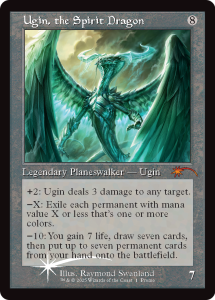
Foils, borderless art, showcase frames, extended art, etched foils, serialized cards and other special treatments create many versions of the same card. Collectors pay more for rare treatments, while players often prefer the regular version.
8. Language and printing
English cards are the most liquid in the US market. Some Japanese cards, especially alternate-art versions, carry a premium. Misprints and early printings can be valuable to specialist collectors.
9. Popularity and nostalgia
Iconic characters, beloved artists and crossover licenses can push a card above what its playability alone would suggest. Universes Beyond sets, from The Lord of the Rings to Final Fantasy, have shown how much fans will pay for cards tied to a favorite franchise.
10. Time since release
Many cards are most expensive in preorder or release week, then settle as packs are opened. Cards that are still in demand after the set leaves shelves often rise again as supply dries up.
How to check MTG card prices
Before you buy, sell or trade, look up current MTG card prices from more than one source. Because MTG card prices move, a number you saw a month ago may no longer be accurate.
- Identify the exact printing. Check the set symbol, collector number at the bottom of the card, and whether it is foil or a special treatment.
- Look it up. Scryfall shows every printing of a card with reference prices, and the official Gatherer database confirms card details.
- Check recent sales. Market price based on completed sales is more reliable than the highest listing.
- Compare condition and language. Make sure the price you are reading matches your copy.
- Look at the trend. A price chart over the last few months tells you whether a card is spiking or settling.
Common lookup mistakes
- Comparing a foil price with a non-foil card, or the other way round.
- Reading the price of a special treatment when you have the regular version.
- Using a single outlier listing as the value.
- Forgetting that buylist prices are always lower than retail.
Reading condition and its effect on MTG card prices
Condition is one of the biggest reasons two copies of the same card sell for different amounts. Most stores use a similar scale, though exact definitions vary. Always check each store’s own guide.
- Near Mint (NM): looks fresh from the pack, with at most a tiny imperfection.
- Lightly Played (LP): minor edge or corner wear, light scratches, still very presentable.
- Moderately Played (MP): clear wear, edge whitening, possibly light creases.
- Heavily Played (HP): significant wear, creases or scuffing, but still tournament legal in a sleeve.
- Damaged (DMG): tears, water damage, heavy creases, writing or other serious issues.
How to inspect a card
Use good light and look at the card at an angle. Check the back corners and edges first, since whitening shows up there. Then tilt the front to spot scratches, especially on foils. Look for bends by laying the card flat. Foils can curl a little; that is normal and usually not a defect on its own.
Graded cards
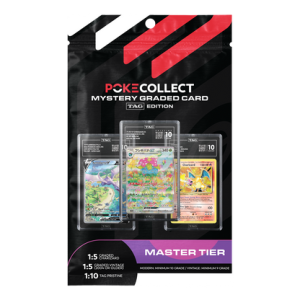
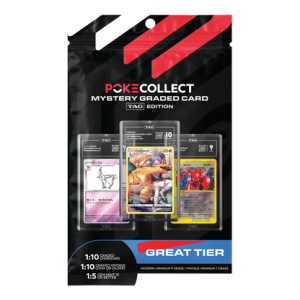
For high-value cards, third-party grading gives a numeric grade and seals the card in a slab. Graded copies of rare cards can sell for more than raw copies, but grading costs money and takes time, so it is usually only worth it for valuable cards in excellent condition. You can browse examples in our graded cards section.
MTG card prices for Commander staples
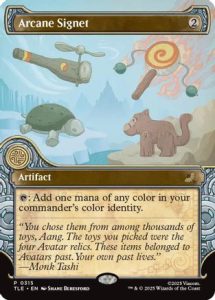
Commander staples behave a little differently from competitive cards. Cards such as Sol Ring, Arcane Signet, Swiftfoot Boots and Heroic Intervention go into thousands of decks, so demand is huge and constant. At the same time, Wizards reprints many of them in precons, which keeps supply high. The result is that the most common printings of these staples are usually affordable, while rare treatments and older printings of the same cards can command much more.
When you track MTG card prices for a Commander deck, sort your wish list into two groups. The first is reprinted staples, which you can usually buy any time without worrying much about timing. The second is cards that rarely see reprints or that just became popular with a new commander. Those are the ones to buy early or watch closely, because their prices can climb quickly once a new deck idea catches on.
A practical tip: when a new Commander precon is announced, check its decklists. Any card being reprinted in it is likely to soften in price around release, so it can pay to wait a few weeks.
MTG card prices for sealed product
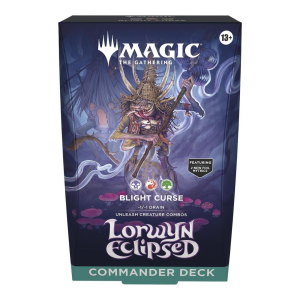
Sealed booster boxes, Collector Booster boxes and Commander decks follow their own price logic. In release month, sealed product is plentiful. Once a set goes out of print, supply drops and some boxes rise in value, especially if the set has popular chase cards. Others never gain much, because the singles inside are cheap.
If you buy sealed to play, think about the experience: drafting with friends or opening a box together is great fun. If you buy sealed to hold, remember that it is speculative and that reprints and set popularity are hard to predict. Browse current booster boxes or try a mystery box for the thrill of the pull.
Selling cards and getting a fair offer
When you sell, you are usually choosing between speed and maximum return. Selling directly to another player can get you closer to market price but takes time, listing work and shipping. Selling to a store is fast and safe, but the offer will be below retail, because the store takes on the risk and work of reselling.
Prepare your cards
- Sort valuable cards from bulk. Most commons and uncommons are bulk, and they are usually bought by quantity rather than one by one.
- Note set, foil status and condition for each valuable card.
- Check MTG card prices for each one so you know what to expect.
- Sleeve your best cards so they do not get damaged in transit.
Cash or store credit
Many stores offer more value in store credit than in cash, because credit stays in their shop. If you plan to buy other cards anyway, credit is often the better deal. Our sell and trade page explains how to send us your cards for cash or store credit, and you can contact our team with questions about larger collections.
Buying smart when MTG card prices move
MTG card prices reward patience. A few habits help you avoid overpaying:
- Buy after the hype. New cards often drop in the weeks after release.
- Wait for reprints if you can. Popular cards that are clearly due for a reprint may get cheaper.
- Buy staples early. Cards that see play everywhere rarely get cheaper for long.
- Pick the version you need. A regular copy plays exactly the same as a fancy treatment.
- Consider collections. Used collections can contain useful staples at a lower per-card price.
If you are building a Commander deck, browse MTG singles by card name, and keep a list of what you still need so you buy each card once.
MTG card prices FAQ
Why do MTG card prices change so often?
Because they are set by supply and demand. New sets, bans, reprints, tournament results and social media can all shift demand quickly, and prices follow.
Where is the best place to check MTG card prices?
Use a reference site that shows prices for every printing, then compare with recent completed sales. Always match the exact printing, finish and condition.
Are foil cards always worth more?
Not always. Many foils are worth more, but some regular cards are worth more than foils of the same card, especially from sets where foils were common.
Why is a store’s buylist lower than the market price?
A store has to check, grade, store and resell each card, and it carries the risk that the price drops. The buylist reflects that cost.
Do MTG card prices go up over time?
Some do and many do not. Staples, Reserved List cards and iconic cards often hold value, while most cards from a new set fall after release. Treat cards as a hobby first.
Buying MTG card prices online: a practical checklist
Shopping for MTG card prices online is convenient, but a little preparation helps you get exactly what you expect. Use this checklist every time you buy Magic: The Gathering products, whether you are picking up a single card, a sealed box or a premium collection.
Before you order
- Confirm the exact product. Check the set name, card number, language and finish in the listing title and photos.
- Read the condition. Singles are usually listed as Near Mint, Lightly Played or similar. Graded cards show the grading company and grade.
- Check stock status. In-stock items ship sooner than pre-orders, which ship when the product releases.
- Compare value, not just price. A bundle with sleeves, dice or promos may be better value than packs alone.
- Know the policies. Read the shipping, returns and contact information before checkout.
When your order arrives
- Open the parcel carefully and check that everything matches the order.
- Inspect singles and slabs under good light straight away.
- Sleeve and store cards immediately so they keep their condition.
- Contact the store quickly if anything is wrong, with photos of the item and packaging.
How to store and care for MTG card prices
Good storage protects both the look and the value of MTG card prices. Cards are made of layered paper and ink, so heat, light, moisture and pressure all cause damage over time. A few simple habits make a big difference.
- Sleeve first. A soft penny sleeve stops scratches and fingerprints.
- Add rigid protection. Toploaders or semi-rigid holders stop bends for valuable cards.
- Choose the right binder. Side-loading, acid-free binders keep cards secure and easy to view. Avoid ring binders that press into cards.
- Control the environment. Keep cards in a cool, dry room away from windows, radiators and damp basements.
- Store sealed product flat. Boxes and tins last longer stored flat and out of direct light.
- Handle with clean, dry hands. Oils and moisture can mark card surfaces.
You can find sleeves, toploaders, binders and deck boxes in our TCG accessories range.
Useful terms for MTG card prices collectors
- Single: an individual card sold on its own.
- Sealed: unopened product in its original factory wrap.
- Pull rate: how often a type of card appears in packs.
- Chase card: the most wanted card in a set.
- Slab: a card graded and sealed in a hard plastic case.
- NM / LP / MP / HP: condition grades from Near Mint to Heavily Played.
- Reprint: a card printed again in a later product.
- Pre-order: reserving a product before its release date.
Common mistakes to avoid with MTG card prices
Even experienced collectors make avoidable mistakes. Keeping these in mind will save you money and protect your cards.
- Chasing one card through endless packs. If you need a specific card, the single is almost always the cheaper route.
- Skipping protection. A card left unsleeved for a day can pick up a scratch that lowers its value.
- Buying on hype alone. Prices can move quickly after a release. Check several recent sales before paying a premium.
- Ignoring condition notes. Two copies of the same card can differ greatly in value because of wear.
- Storing cards in the wrong place. Attics, garages and sunny windowsills are hard on cardboard.
- Forgetting your goal. A clear plan, such as finishing a set or upgrading a deck, keeps spending focused.
A simple plan to get started with MTG card prices
- Set a goal. Decide whether you are collecting, playing or both.
- Set a monthly budget. Spending a fixed amount keeps the hobby fun and sustainable.
- Mix sealed and singles. Open packs for enjoyment and buy singles for the cards you really need.
- Protect as you go. Sleeves and toploaders cost little compared with the cards they protect.
- Track your collection. A simple list shows what you own and what you still want.
- Sell or trade duplicates. Turn cards you do not need into new additions through a trusted store.
Why shop for MTG card prices at TCG Store USA
TCG Store USA is an online trading card shop for collectors and players. We list Magic: The Gathering products with clear titles and photos, separate in-stock items from pre-orders, and offer a sell and trade service when you want to turn cards into cash or store credit. Browse our singles, booster boxes and graded cards, or contact us with any question about an order or product. For official news, rules and release announcements, visit the official Magic: The Gathering site.
Final thoughts on MTG card prices
MTG card prices come down to supply and demand, shaped by playability, reprints, bans, treatments and condition. Check the exact printing, compare more than one source, and be realistic about the difference between retail and buylist. Do that and you will buy, sell and trade with confidence. Explore our MTG singles, browse the full shop, or visit the sell and trade page when it is time to turn spare cards into something new.