
Gold Pokémon Cards: 12 Best Hyper Rares and How to Collect Them
Gold Pokémon cards have a special pull on collectors. There is something about a shining gold border sitting at the very end of a set list that makes a binder page feel complete. In this guide you will learn the different kinds of gold Pokémon cards from every era, how to identify the real thing, which cards collectors chase, and how to keep that gold looking perfect.

What counts as gold Pokémon cards?
“Gold” means different things depending on when a card was printed. Collectors use the term for several distinct groups, and knowing which one you are looking at helps you value it correctly.
- Gold Star cards: rare shiny Pokémon from the EX era, marked with a small star next to the name.
- Gold secret rares: gold-bordered cards from the Sun & Moon and Sword & Shield eras, numbered above the set total.
- Hyper rares: the Scarlet & Violet and Mega Evolution era name for gold cards, marked with three gold stars.
- Metal and novelty gold cards: special products such as metal cards in premium collections and the gold-plated cards from 1999 fast food promotions.
Gold Star cards: the original gold Pokémon cards
Gold Star cards appeared during the EX series in the mid-2000s, starting with EX Team Rocket Returns. They show a shiny-colored Pokémon with a gold star after its name, and they were extremely hard to pull, often around one in several booster boxes. Many decks could only run one Gold Star card, which added to their mystique.
Famous examples include Gold Star Rayquaza from EX Deoxys, Gold Star Charizard and Gold Star Mew from EX Dragon Frontiers, and Gold Star Umbreon and Espeon from the POP Series 5 promotional packs. Those last two are especially scarce because POP packs were small, distributed in limited ways and often opened by children.
Why Gold Star cards cost so much
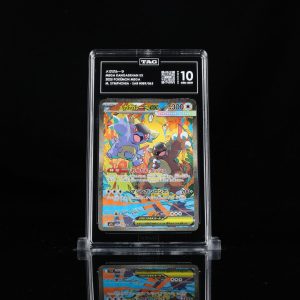
They are old, they had tiny print runs compared with modern cards, and many surviving copies are played or off-center. A Gold Star card in high grade is a true vintage grail and one of the most prestigious gold Pokémon cards you can own. If you are shopping for one, a graded copy removes a lot of risk.
Gold secret rares from Sun & Moon and Sword & Shield
In the Sun & Moon era, gold secret rares became a standard part of most sets. They covered Pokémon-GX, Trainer items and special Energy, all printed with gold frames and a textured surface. Sword & Shield continued the idea with gold Pokémon V, VMAX and VSTAR cards, items and Stadiums.
Item cards in gold might sound dull, but some of these gold Pokémon cards became favorites because they are cheap enough for players to put in decks while still looking flashy. Gold Pokémon versions of popular species, on the other hand, often top the price charts for their sets.
Celebrations and special gold products
The 25th anniversary Celebrations release included gold metal cards in its ultra premium product, plus reprints of classic cards. Metal cards are not tournament legal, but they make striking display pieces. Treat them as collectibles rather than playable cards.
Hyper rares: modern gold Pokémon cards
From Scarlet & Violet onward, the gold rarity is called hyper rare and is shown by three gold stars at the bottom of the card. Hyper rares are usually the very last cards in a set’s numbering, after illustration rares and special illustration rares.
Hyper rares typically include gold ex Pokémon, gold items, gold Energy and sometimes gold Trainers. Because they sit in the hardest pull slot, they can be tough to find, though collector demand varies a lot between them. A gold version of a popular Pokémon can outpace the special illustration rares in its set, while a gold Energy might be easier to pick up.
The Mega Evolution series continues the three-gold-star system, with gold Mega ex cards becoming popular targets for collectors. Our Pokémon singles include Mega Evolution cards when they are in stock.
12 gold Pokémon cards and card groups collectors love
Here is a starting list of gold cards that collectors talk about again and again. Prices change constantly, so treat this as inspiration rather than a price guide.
- Gold Star Charizard (EX Dragon Frontiers): the dream card for many vintage fans.
- Gold Star Umbreon (POP Series 5): rare, iconic and fiercely collected.
- Gold Star Espeon (POP Series 5): the partner to Umbreon and almost as scarce.
- Gold Star Rayquaza (EX Deoxys): a striking shiny design.
- Gold Star Mew (EX Dragon Frontiers): a popular choice for Mew collectors.
- Gold Pikachu cards: the mascot in gold is always in demand across eras.
- Gold Charizard cards from modern sets: any gold Charizard tends to attract attention.
- Gold Mew ex from Scarlet & Violet 151: the final card in the 151 set list.
- Gold Rayquaza VMAX and Rayquaza variants: fan favorites of the Sword & Shield era.
- Gold Mega Evolution ex cards: modern targets for new collectors.
- Gold Trainer items: affordable gold cards that players actually use.
- Celebrations metal cards: display pieces from the anniversary celebration.
How to identify genuine gold Pokémon cards
Because gold looks so appealing, fake gold cards are common, especially fake metal or foil “gold” cards that were never officially printed. Use these checks.
Check the number and rarity
Genuine gold secret rares and hyper rares have a collector number above the set total, for example 210/198. Hyper rares show three gold stars as the rarity mark. Gold Star cards show a star after the Pokémon’s name and the usual rarity star at the bottom.
Check the texture
Modern official gold cards have an etched texture you can feel with a fingertip and see when you tilt the card in light. Many fakes are smooth and glossy with a flat, painted look.
Check the text and font
Look for spelling mistakes, odd attack damage, the wrong Energy symbols and blurry type. Fake gold Pokémon cards often have impossible HP values or made-up attacks.
Beware of “gold foil” novelty cards
Many online listings sell gold foil cards that look like Pokémon cards but are not official. If a deck of fifty “gold Charizards” is cheap, they are not real. Official gold cards come from booster packs and official products only.
English versus Japanese gold cards
Japanese sets often include gold cards too, sometimes with different numbering and slightly different finishes. Japanese gold cards are well regarded for print quality and centering. If you want variety in your binder, mixing English and Japanese gold Pokémon cards looks fantastic. Explore our Japanese Pokémon cards for sets released only in Japan, such as High Class Packs.
Collecting strategies for gold Pokémon cards
A focused plan keeps collecting fun. Here are approaches that work well.
- Collect one era: aim for every gold card from Scarlet & Violet, or every Gold Star from the EX series.
- Collect one Pokémon: chase every gold version of your favorite species across eras.
- Collect gold items: an affordable route that still gives you a shining binder.
- Collect graded gold: choose a few high-grade slabs instead of many raw cards.
- Collect by set: finish a master set, with the gold cards as your final targets.
If you are pulling cards from packs, our booster boxes give you many chances at hyper rares. For guaranteed hits, the singles route is usually more economical.
Grading gold Pokémon cards
Gold cards are tricky to grade because their textured surfaces show scratches, print lines and whitening on the edges very clearly. Before sending a gold card for grading, check it under bright light at several angles. Look carefully at the gold border, which can reveal tiny chips or dents.
Price guides such as the PSA price guide show how grades affect value. A gold card in top grade can be worth many times a lower-graded copy. If you prefer to buy rather than submit, browse our graded cards or try a mystery slab for the thrill.
Keeping the shine on gold cards
Gold surfaces are more delicate than they look. A few extra steps protect them beyond the usual sleeve and toploader:
- Use soft, clear sleeves without patterns so you do not scuff the texture when inserting the card.
- Avoid displaying gold cards in direct sunlight, which can fade inks around the gold.
- Do not stack gold cards face to face without sleeves; textured surfaces can scratch each other.
- For display, consider a magnetic holder or UV-protected case.
Building a binder of gold Pokémon cards
A dedicated binder for gold Pokémon cards is one of the most satisfying displays in the hobby. Gold looks best in large groups, so a nine-pocket page full of hyper rares catches the light in a way single cards never do. Choose a side-loading binder with black pages, which make gold borders stand out far more than white or clear pages.
Ways to organize the binder
- By era: Gold Stars first, then gold secret rares, then modern hyper rares, so the binder tells the story of gold Pokémon cards over time.
- By type: group gold Pokémon, gold items and gold Energy on separate pages.
- By National Pokédex number: a neat approach if you chase gold versions of many species.
- By color: mix gold with rainbow rares and silver cards for contrast.
Leave empty pockets for the cards you still want. Seeing the gaps keeps your collecting focused and makes finding the next one feel special.
Budget tips for collecting gold Pokémon cards
Not every gold card costs a fortune. Gold items, Stadiums and Energy from the Sun & Moon and Sword & Shield eras are often affordable entry points, and many look just as striking as gold Pokémon. Buying raw singles in Near Mint condition, rather than graded copies, also keeps costs down. Save grading for the gold Pokémon cards you are sure you want to keep long term, and compare recent sales before buying any higher-priced card.
Collections can be another smart route. A lot of older cards sometimes includes gold secret rares from earlier sets, and it gives you trade material too. Browse our collections for ideas.
Gold Pokémon cards FAQ
Are gold Pokémon cards rare?
Generally, yes. Gold cards sit in the hardest pull slots in most modern sets, and vintage Gold Star cards are some of the scarcest cards of the 2000s.
What is the difference between a gold card and a hyper rare?
Hyper rare is the official rarity name for modern gold cards in the Scarlet & Violet and Mega Evolution eras. Older gold cards were usually called secret rares.
Are metal gold Pokémon cards real?
Some are official, such as the metal cards included in certain premium collections. Many others sold online are unofficial novelty items. Official metal cards are not legal for tournament play.
Are gold Pokémon cards worth grading?
Popular gold Pokémon in excellent condition are often worth grading. Common gold items and Energy cards may not justify the cost unless they are flawless.
Can I play gold cards in tournaments?
Yes. Official gold secret rares and hyper rares are legal versions of their cards, as long as the card itself is legal in the format you play.
Buying gold Pokémon cards online: a practical checklist
Shopping for gold Pokémon cards online is convenient, but a little preparation helps you get exactly what you expect. Use this checklist every time you buy Pokémon TCG products, whether you are picking up a single card, a sealed box or a premium collection.
Before you order
- Confirm the exact product. Check the set name, card number, language and finish in the listing title and photos.
- Read the condition. Singles are usually listed as Near Mint, Lightly Played or similar. Graded cards show the grading company and grade.
- Check stock status. In-stock items ship sooner than pre-orders, which ship when the product releases.
- Compare value, not just price. A bundle with sleeves, dice or promos may be better value than packs alone.
- Know the policies. Read the shipping, returns and contact information before checkout.
When your order arrives
- Open the parcel carefully and check that everything matches the order.
- Inspect singles and slabs under good light straight away.
- Sleeve and store cards immediately so they keep their condition.
- Contact the store quickly if anything is wrong, with photos of the item and packaging.
How to store and care for gold Pokémon cards
Good storage protects both the look and the value of gold Pokémon cards. Cards are made of layered paper and ink, so heat, light, moisture and pressure all cause damage over time. A few simple habits make a big difference.
- Sleeve first. A soft penny sleeve stops scratches and fingerprints.
- Add rigid protection. Toploaders or semi-rigid holders stop bends for valuable cards.
- Choose the right binder. Side-loading, acid-free binders keep cards secure and easy to view. Avoid ring binders that press into cards.
- Control the environment. Keep cards in a cool, dry room away from windows, radiators and damp basements.
- Store sealed product flat. Boxes and tins last longer stored flat and out of direct light.
- Handle with clean, dry hands. Oils and moisture can mark card surfaces.
You can find sleeves, toploaders, binders and deck boxes in our TCG accessories range.
Useful terms for gold Pokémon cards collectors
- Single: an individual card sold on its own.
- Sealed: unopened product in its original factory wrap.
- Pull rate: how often a type of card appears in packs.
- Chase card: the most wanted card in a set.
- Slab: a card graded and sealed in a hard plastic case.
- NM / LP / MP / HP: condition grades from Near Mint to Heavily Played.
- Reprint: a card printed again in a later product.
- Pre-order: reserving a product before its release date.
Common mistakes to avoid with gold Pokémon cards
Even experienced collectors make avoidable mistakes. Keeping these in mind will save you money and protect your cards.
- Chasing one card through endless packs. If you need a specific card, the single is almost always the cheaper route.
- Skipping protection. A card left unsleeved for a day can pick up a scratch that lowers its value.
- Buying on hype alone. Prices can move quickly after a release. Check several recent sales before paying a premium.
- Ignoring condition notes. Two copies of the same card can differ greatly in value because of wear.
- Storing cards in the wrong place. Attics, garages and sunny windowsills are hard on cardboard.
- Forgetting your goal. A clear plan, such as finishing a set or upgrading a deck, keeps spending focused.
A simple plan to get started with gold Pokémon cards
- Set a goal. Decide whether you are collecting, playing or both.
- Set a monthly budget. Spending a fixed amount keeps the hobby fun and sustainable.
- Mix sealed and singles. Open packs for enjoyment and buy singles for the cards you really need.
- Protect as you go. Sleeves and toploaders cost little compared with the cards they protect.
- Track your collection. A simple list shows what you own and what you still want.
- Sell or trade duplicates. Turn cards you do not need into new additions through a trusted store.
Why shop for gold Pokémon cards at TCG Store USA
TCG Store USA is an online trading card shop for collectors and players. We list Pokémon TCG products with clear titles and photos, separate in-stock items from pre-orders, and offer a sell and trade service when you want to turn cards into cash or store credit. Browse our singles, booster boxes and graded cards, or contact us with any question about an order or product. For official news, rules and release announcements, visit the official Pokémon TCG site.
Final thoughts on gold Pokémon cards
Gold Pokémon cards connect every era of the hobby, from the scarce Gold Stars of the EX series to the hyper rares in today’s sets. Learn the markings, feel for the texture, protect the surface and pick a collecting focus you enjoy. Whether you want a single gold item or a graded Gold Star, our Pokémon singles and graded cards are a great place to begin.