Commander MTG: The Ultimate 2026 Beginner Guide to a Fun Format
Commander MTG is the most popular way to play Magic: The Gathering today. It is a multiplayer format where each player builds a 100-card deck around a legendary leader, and it rewards creativity, social play, and big memorable moments. This guide explains the history of Commander MTG, the core rules, why it has taken over kitchen tables and game stores, and how to start playing even if you have never shuffled a deck.
What is Commander MTG?
Commander MTG, also called EDH (Elder Dragon Highlander), is a format where each player chooses a legendary creature as their commander and builds a deck of exactly 100 cards, including the commander. Apart from basic lands, every card in the deck must be different. Games usually have four players, each starting at 40 life.
The commander starts the game in a special place called the command zone, so you can cast it every game. That consistency is one of the reasons the format is so satisfying: your deck has a recognizable personality and strategy built around your chosen leader.
History of Commander MTG
The format began in the mid-1990s as Elder Dragon Highlander, a casual variant played by judges. Early decks were built around the Elder Dragons from Legends. The format spread through the judge community and online groups, and a community Rules Committee, with the late Sheldon Menery as one of its most recognizable leaders, shaped its rules and philosophy for years.
Wizards of the Coast officially embraced the format in 2011 with the first Commander preconstructed decks, and the name Commander became standard. Since then, Commander MTG has grown into a central part of Magic’s design, with new precons and Commander-focused cards in nearly every release.
Recent changes to stewardship
In September 2024, after a controversial set of bans, the Rules Committee handed management of Commander MTG to Wizards of the Coast. Wizards now oversees the format, working with a Commander Format Panel. In February 2025, Wizards introduced the Commander Brackets beta and the Game Changers list to help players match power levels.
Core rules of Commander MTG
Commander MTG uses the normal rules of Magic with a few important changes:
- 100-card singleton: exactly 100 cards, no duplicates except basic lands.
- Legendary commander: your commander is usually a legendary creature, and some cards say they can be your commander.
- Color identity: every card’s mana symbols must match your commander’s colors.
- 40 starting life: games last longer and allow more interaction.
- Commander damage: 21 combat damage from a single commander eliminates a player.
- Commander tax: each time you recast your commander from the command zone, it costs two more.
Color identity explained
Color identity includes every mana symbol in a card’s cost and rules text. A mono-green commander can only use green and colorless cards. Hybrid mana counts as both colors, and in February 2026 Wizards decided to keep that rule rather than change it.
Partner, backgrounds, and companions
Some cards let you have two commanders, such as partners or a commander paired with a background. Companions are another special rule, and some cards are banned specifically as companions in Commander.
Why Commander MTG is so popular
Commander MTG became the most-played Magic format for several reasons:
- Social play: four-player games are about table talk, deals, and politics.
- Self-expression: your commander and 99 cards say something about you.
- Use your whole collection: old favorites stay legal, so cards stay useful.
- No rotation: your deck never stops being legal because a set rotated out.
- Precons: ready-to-play decks make it easy to jump in.
Commander also brings Magic to new audiences through crossovers like Final Fantasy, Marvel, and Secret Lair drops, which give fans of other franchises a reason to try the format.
Power levels and brackets
Because Commander MTG is mostly casual, matching power levels matters. The Commander Brackets system gives players five tiers: Exhibition, Core, Upgraded, Optimized, and cEDH. A Bracket 2 deck should not include any Game Changers, Bracket 3 allows up to three, and Brackets 4 and 5 have no limit.
The idea is to talk before you play. Tell the table your bracket and what your deck does, and adjust if needed. You can find official information about the format on the official Wizards Commander page.
How to start playing Commander MTG
Starting is easier than ever. Follow these steps:
- Pick a precon. Starter Commander decks and recent preconstructed decks are ready to play out of the box.
- Learn the commander’s strategy. Read your commander and look for cards that support it.
- Play a few games. Learn what works and what feels slow.
- Upgrade slowly. Swap a few cards at a time with MTG singles.
- Find a playgroup. Local stores, friends, and online communities all run games.
Simple deck structure for beginners
- 36 to 38 lands: a reliable base for most decks.
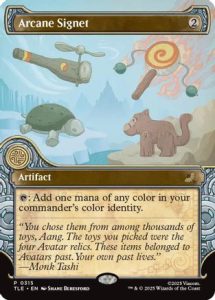
- 10 or so ramp cards: Sol Ring, Arcane Signet, and mana rocks help you cast spells faster.
- 10 card draw sources: keep your hand full in long games.
- 8 to 10 removal and interaction spells: deal with threats.
- Remaining slots: creatures and spells that support your strategy.
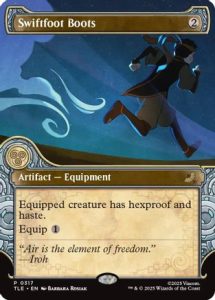
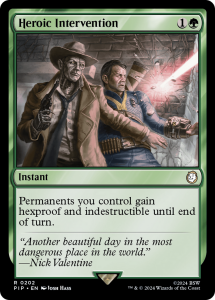
Protective staples like Heroic Intervention and Swiftfoot Boots help keep your key pieces alive.
Popular Commander MTG archetypes
One of the joys of Commander MTG is the sheer variety of strategies. Here are common archetypes you will meet at almost any table:
- Tokens: go wide with lots of small creatures, then pump them all at once.
- Voltron: suit up your commander with equipment and auras for 21 commander damage.
- Spellslinger: cast instants and sorceries to trigger your commander repeatedly.
- Aristocrats: sacrifice creatures for value and drain opponents.
- Landfall and ramp: play extra lands and turn mana into huge threats.
- Tribal: build around a creature type, like Elves, Dragons, or Zombies.
- Control: answer everything and win slowly with card advantage.
Choosing an archetype you enjoy is more important than choosing the strongest one. A deck you love to pilot will teach you more about Commander MTG than a borrowed top-tier list.
Picking your first commander
Look for a commander whose ability does something every turn or every time it attacks. Simple, proactive commanders are easier to learn than complex combo pieces. Two-color commanders are also a nice balance: more card options than mono-color decks, but simpler mana than three or more colors.
Multiplayer strategy in Commander MTG
Four-player games feel very different from one-on-one Magic. You are not just trying to beat one opponent; you are managing three. A few principles help newcomers:
- Don’t look like the biggest threat too early. Players gang up on whoever is ahead.
- Save removal for real threats. Spending it on the first creature you see often backfires.
- Use politics honestly. Deals and temporary alliances are part of the format, but keep your word.
- Watch the whole board. Track who is close to winning, not just who attacked you.
- Know when to strike. A well-timed swing after a board wipe often wins games.
Board wipes and recovery
Board wipes are common in Commander MTG because they answer several opponents at once. Avoid overcommitting your whole hand to the battlefield, and keep a plan to rebuild. Cards that protect your board, such as Heroic Intervention, are valuable for exactly this reason.
How a Commander MTG game flows
A typical casual game runs in three loose phases. In the early turns, players develop mana and set up engines, and attacks are small. In the middle turns, commanders hit the battlefield, threats appear, and the first board wipes or big plays happen. In the late game, someone usually makes a decisive push, and the table either answers it or the game ends.
Games commonly last one to two hours with four players, depending on deck speed and how much interaction everyone runs. Faster, more optimized decks end sooner, which is one reason brackets now include rough turn estimates. Knowing that rhythm helps you plan: early ramp, mid-game threats, and a clear finisher.
Winning without being the villain
The best Commander MTG players win while keeping the game fun. Explain big plays as you make them, avoid dragging out turns when the result is obvious, and congratulate the winner whoever it is.
Commander MTG beyond the kitchen table
Commander MTG also has competitive and digital sides. cEDH, the most competitive bracket, has its own tournaments and deeply tuned decks. Online, Magic Online supports Commander, and Arena offers Brawl, a related format with smaller decks and its own ban list.
Many stores run weekly Commander nights, and conventions like MagicCon feature huge Commander play areas. If you want to meet new players, a local Commander night is usually the friendliest entry point in Magic.
Commander MTG etiquette
Good manners make Commander MTG games better for everyone. Explain your commander before the game, keep your turns reasonably quick, and avoid repeated actions that make the game drag. If someone is new, help them understand what is happening. Remember that the goal of a casual game is for everyone to have fun.
Budget tips for Commander MTG
Commander MTG can be as affordable or as expensive as you want. A precon is a full deck at a fixed price, and many great upgrades cost very little. Here are a few ways to keep spending under control:
- Set a budget per upgrade round. Decide how much to spend before you shop.
- Prioritize lands and ramp. Better mana improves every game.
- Trade duplicates. Extra cards from precons and packs can become store credit.
- Skip the hype. New cards often drop in price after release.
- Borrow before buying. Test an expensive card in a friend’s deck first.
If you have older cards gathering dust, our sell and trade page lets you turn them into cash or store credit toward your next Commander MTG upgrade.
Precons worth a look
Recent precons have included crossovers like Final Fantasy and Marvel Super Heroes, as well as beginner-friendly Starter Commander decks designed to teach the format. These are a great way to try different strategies without building from scratch.
Common Commander MTG terms
- The 99: the 99 cards in your deck besides the commander.
- Precon: a preconstructed deck sold ready to play.
- cEDH: competitive EDH, the highest power bracket.
- Pod: a group of players at one table, usually four.
- Rule zero: the pre-game conversation about house rules and power level.
- Staple: a card that fits in many decks, like Sol Ring.
Learning the vocabulary makes it much easier to follow conversations at your local game store or online, and it helps you explain your deck clearly to new opponents.
Commander MTG FAQ
How many cards are in a Commander deck?
Exactly 100 cards, including your commander.
What is the starting life total?
Each player starts at 40 life.
Is EDH the same as Commander MTG?
Yes. EDH stands for Elder Dragon Highlander, the original name of the format.
Who manages the Commander rules?
Since September 2024, Wizards of the Coast has managed the format with input from a Commander Format Panel.
What is the best way to start?
Buy a preconstructed deck, play a few games, and upgrade slowly.
Buying Commander MTG online: a practical checklist
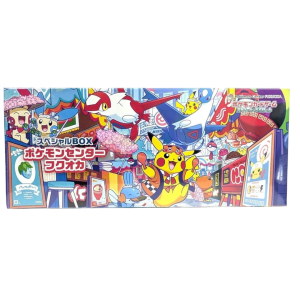
Shopping for Commander MTG online is convenient, but a little preparation helps you get exactly what you expect. Use this checklist every time you buy Magic: The Gathering products, whether you are picking up a single card, a sealed box or a premium collection.
Before you order
- Confirm the exact product. Check the set name, card number, language and finish in the listing title and photos.
- Read the condition. Singles are usually listed as Near Mint, Lightly Played or similar. Graded cards show the grading company and grade.
- Check stock status. In-stock items ship sooner than pre-orders, which ship when the product releases.
- Compare value, not just price. A bundle with sleeves, dice or promos may be better value than packs alone.
- Know the policies. Read the shipping, returns and contact information before checkout.
When your order arrives
- Open the parcel carefully and check that everything matches the order.
- Inspect singles and slabs under good light straight away.
- Sleeve and store cards immediately so they keep their condition.
- Contact the store quickly if anything is wrong, with photos of the item and packaging.
How to store and care for Commander MTG
Good storage protects both the look and the value of Commander MTG. Cards are made of layered paper and ink, so heat, light, moisture and pressure all cause damage over time. A few simple habits make a big difference.
- Sleeve first. A soft penny sleeve stops scratches and fingerprints.
- Add rigid protection. Toploaders or semi-rigid holders stop bends for valuable cards.
- Choose the right binder. Side-loading, acid-free binders keep cards secure and easy to view. Avoid ring binders that press into cards.
- Control the environment. Keep cards in a cool, dry room away from windows, radiators and damp basements.
- Store sealed product flat. Boxes and tins last longer stored flat and out of direct light.
- Handle with clean, dry hands. Oils and moisture can mark card surfaces.
You can find sleeves, toploaders, binders and deck boxes in our TCG accessories range.
Useful terms for Commander MTG collectors
- Single: an individual card sold on its own.
- Sealed: unopened product in its original factory wrap.
- Pull rate: how often a type of card appears in packs.
- Chase card: the most wanted card in a set.
- Slab: a card graded and sealed in a hard plastic case.
- NM / LP / MP / HP: condition grades from Near Mint to Heavily Played.
- Reprint: a card printed again in a later product.
- Pre-order: reserving a product before its release date.
Common mistakes to avoid with Commander MTG
Even experienced collectors make avoidable mistakes. Keeping these in mind will save you money and protect your cards.
- Chasing one card through endless packs. If you need a specific card, the single is almost always the cheaper route.
- Skipping protection. A card left unsleeved for a day can pick up a scratch that lowers its value.
- Buying on hype alone. Prices can move quickly after a release. Check several recent sales before paying a premium.
- Ignoring condition notes. Two copies of the same card can differ greatly in value because of wear.
- Storing cards in the wrong place. Attics, garages and sunny windowsills are hard on cardboard.
- Forgetting your goal. A clear plan, such as finishing a set or upgrading a deck, keeps spending focused.
A simple plan to get started with Commander MTG
- Set a goal. Decide whether you are collecting, playing or both.
- Set a monthly budget. Spending a fixed amount keeps the hobby fun and sustainable.
- Mix sealed and singles. Open packs for enjoyment and buy singles for the cards you really need.
- Protect as you go. Sleeves and toploaders cost little compared with the cards they protect.
- Track your collection. A simple list shows what you own and what you still want.
- Sell or trade duplicates. Turn cards you do not need into new additions through a trusted store.
Why shop for Commander MTG at TCG Store USA
TCG Store USA is an online trading card shop for collectors and players. We list Magic: The Gathering products with clear titles and photos, separate in-stock items from pre-orders, and offer a sell and trade service when you want to turn cards into cash or store credit. Browse our singles, booster boxes and graded cards, or contact us with any question about an order or product. For official news, rules and release announcements, visit the official Magic: The Gathering site.
Final thoughts on Commander MTG
Commander MTG is a social, creative, and endlessly replayable way to enjoy Magic. Start with a precon, learn your commander, and upgrade over time. Browse MTG singles, check booster boxes, explore collections, grab sleeves from accessories, try mystery boxes, or trade your spares through our sell and trade page. Visit the shop to get started.