Pokémon Cards: The Ultimate 2026 Guide to Collecting Smart and Happy
Pokémon cards are having another huge moment. The franchise turned 30 in 2026, the Mega Evolution era is in full swing, and more people than ever are opening packs, building binders and hunting graded slabs. Whether you are returning after twenty years or buying your very first booster, this guide walks you through everything that matters right now: what is on shelves, how the different products work, how to read rarity, what drives value and where to buy without regret.
We have written it for collectors first, but players will find plenty here too. Think of it as the reference page you can come back to whenever a new release lands or a price suddenly jumps.
What Pokémon cards are out right now?
At the time of writing (November 2026), the English Pokémon Trading Card Game is in its Mega Evolution series. That era began in late 2025 and brought Mega Evolution Pokémon ex back to the game as big, flashy chase cards. Through 2026 the series has added main expansions such as Ascended Heroes, Perfect Order, Chaos Rising and Pitch Black, with Delta Reign scheduled for early November.
Sitting alongside those expansions is the 30th Celebration set, released in September 2026 to mark three decades of the brand. It arrived with Elite Trainer Boxes, tins, mini tins, battle decks and booster bundles, and premium collections followed later in the year. Anniversary products tend to attract new buyers and nostalgic fans at the same time, so they are often among the most talked-about Pokémon cards of any year.
Release schedules shift, and regional dates can differ, so always check the official Pokémon TCG website for confirmed dates before you plan a purchase. If you want to lock in upcoming products, our Pokémon pre-orders page lists what is open for reservation.
Why the Mega Evolution era matters
Mega Evolution is a mechanic many fans remember from the XY days, around 2014 to 2016. Bringing it back with modern card design and full-art treatments gave long-time collectors a reason to return and gave newer fans a fresh set of chase cards. Popular Pokémon such as Charizard, Gengar, Lucario and Gardevoir in Mega form are exactly the kind of Pokémon cards that tend to lead want lists.
The main types of Pokémon cards
Before you buy anything, it helps to know what you are looking at. Every card in the game falls into one of three groups, and each group has its own role in play and in collecting.
- Pokémon cards (the creatures). Basic, Stage 1 and Stage 2 Pokémon, plus special mechanics such as Pokémon ex and Mega Evolution Pokémon ex. These carry HP, attacks, a type, weakness and retreat cost.
- Trainer cards. Items, Supporters, Stadiums and Pokémon Tools. Supporters with character art, such as full-art trainers, are hugely popular with collectors.
- Energy cards. Basic Energy powers attacks; Special Energy adds extra effects. Basic Energy rarely carries value, although some promo and textured versions do.
For collecting, the creature cards dominate demand. A gorgeous illustration of a fan-favorite Pokémon will almost always outsell a stronger but plainer Trainer card in the long run.
How Pokémon cards rarity works
Each card has a small rarity symbol in the bottom corner. Learning to read it takes seconds and instantly tells you how hard a card was to pull.
- Circle: Common.
- Diamond: Uncommon.
- One black star: Rare.
- Two black stars: Double Rare, usually a regular Pokémon ex.
- One gold star: Illustration Rare, a full-art scene of a Pokémon in its environment.
- Two silver or gold stars: Ultra Rare and Special Illustration Rare cards, the full-art ex and character pieces.
- Three gold stars: Hyper Rare, the gold-bordered cards at the very top of a set list.
Modern sets also include secret rares, numbered above the official set count (for example 210/191). Any time the first number is higher than the second, you are holding one of the scarcest Pokémon cards in that expansion.
Illustration Rares and Special Illustration Rares
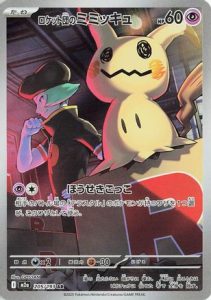
These two rarities changed the hobby. Illustration Rares turned ordinary Pokémon into tiny paintings, often telling a story across a whole set. Special Illustration Rares take that idea further with dramatic artwork of ex Pokémon or Supporters. If you want to see why collectors love modern sets, browse a few in our Pokémon singles collection.
Sealed products: which Pokémon cards product should you buy?
Walk into any shop selling Pokémon cards and you will see a wall of boxes. Here is what each one actually gives you, so you can match the product to your goal.
Booster packs
A standard English booster pack holds 10 cards, including at least one reverse holo and a rare slot. Single packs are the cheapest way to get the thrill of opening Pokémon cards, but they are also the least predictable.
Booster boxes
A booster display box contains 36 packs and offers the best per-pack value for heavy openers or anyone wanting to keep a sealed box long term. Sealed boxes are also the classic long-term hold for collectors. Explore current options in our booster boxes range.
Elite Trainer Boxes
An ETB bundles a set of booster packs with sleeves, energy cards, dice, condition markers and a storage box. Many include a promo card. They make excellent gifts and are a smart starting point because you get accessories with your packs.
Booster bundles, tins and collection boxes
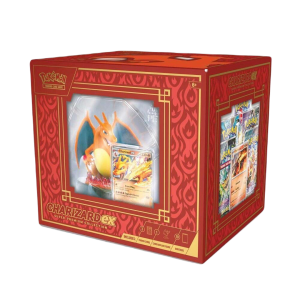
Booster bundles are simple six-pack bundles. Tins and mini tins combine packs with a collectible container and sometimes a promo. Collection boxes, premium collections and Ultra-Premium Collections pair packs with foil promos, oversized cards, pins or metal cards. The higher you go, the more you pay for presentation and exclusives.
Japanese products
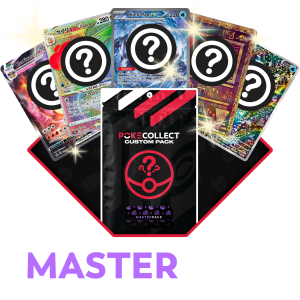
Japanese sets often release months earlier, have smaller packs and are prized for print quality. Special sets like High Class Packs gather the best artwork of a period. Collectors who want a different look, or an early peek at future English cards, should browse our Japanese Pokémon section.
What makes Pokémon cards valuable?
Price guides can look random, but value usually comes down to the same handful of factors. Once you understand them, you can judge a listing in seconds.
- The Pokémon itself. Charizard, Pikachu, Umbreon, Mew, Gengar and the Eeveelutions consistently lead demand.
- Rarity and pull rate. A Special Illustration Rare is far harder to pull than a Double Rare, so supply is lower.
- Artwork. Beautiful, story-driven art keeps a card desirable after the hype of release fades.
- Condition. Centering, corners, edges and surface all matter. Near Mint copies sell for far more than played ones.
- Grading. A PSA 10 or other top grade can multiply a raw card’s value, especially on vintage and modern chase cards.
- Print run and age. Older sets had smaller print runs, and surviving mint copies become scarcer every year.
- Playability. Competitive staples spike when they see heavy tournament use, then often fall after rotation.
For graded price history, the PSA price guide is a helpful reference. Always compare several recent sales rather than trusting a single listing.
Vintage versus modern Pokémon cards
Vintage usually means the Wizards of the Coast era from 1999 to 2003: Base Set, Jungle, Fossil, Team Rocket, the Neo sets and the e-Card series. These Pokémon cards are scarce in high grades and carry deep nostalgia. Modern cards are printed in far larger quantities, but the rarest Special Illustration Rares and Hyper Rares can still reach impressive prices because the pull rates are so low.
Neither category is “better.” Vintage rewards patience and careful authentication; modern rewards knowing which artwork and Pokémon will stay loved. Many collectors keep a little of both.
Raw, graded or sealed: three ways to collect Pokémon cards
Most collectors drift toward one of three styles, and each has clear strengths.
- Raw singles. Ungraded cards in sleeves and binders. This is the most flexible and affordable way to own exactly the artwork you love.
- Graded slabs. Cards authenticated and graded by companies such as PSA, Beckett or CGC. Slabs remove condition guesswork and are easier to resell. See our graded cards for examples.
- Sealed product. Unopened boxes and packs kept as collectibles. Sealed collecting needs space and patience, but it preserves the possibility inside every pack.
Should you grade your Pokémon cards?
Grade Pokémon cards when they are valuable, in excellent condition and likely to earn a high grade. Look for sharp corners, clean edges, a scratch-free surface and good centering. Grading fees and shipping add up, so sending in bulk commons rarely makes sense. Keep the cards that matter to you most in the best shape possible, whether you slab them or not.
Fun ways to collect Pokémon cards
A collecting goal keeps spending focused and makes every addition feel meaningful. Here are popular approaches to choose from:
- Master set: every card in a set, including every reverse holo and secret rare.
- Favorite Pokémon: every printing of one Pokémon across the years, from Base Set to Mega Evolution.
- Artist collection: cards by a single illustrator whose style you love.
- Illustration Rare binder: a page-by-page gallery of the best art cards.
- Japanese or other languages: a fresh twist on familiar cards.
- Anniversary pieces: 25th Celebrations and the 2026 30th Celebration cards side by side.
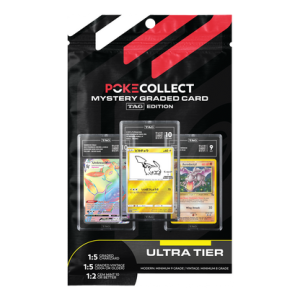
Mystery products add an element of surprise if you enjoy the chase. Our mystery boxes and mystery slabs are built for that feeling.
Where to buy Pokémon cards
You have more options than ever, and each one suits different needs.
- Specialist online stores. Clear listings, condition notes, singles, graded cards and pre-orders in one place.
- Local game stores. Great for community, events and checking cards in person.
- Big-box retailers. Convenient for sealed products, though stock of popular sets can sell out fast.
- Marketplaces. Huge selection, but quality and authenticity vary by seller.
Whichever route you choose, buy from sellers who show real photos, describe condition honestly and explain their policies. If you want to browse everything we carry in one go, visit the full TCG Store USA shop.
How to spot fake Pokémon cards
Counterfeits are common, especially for popular modern cards. Warning signs include washed-out colors, wrong fonts, missing texture on full-art cards, glossy or flimsy card stock and prices that seem too good to be true. Compare a suspicious card with a known real one from the same set. Genuine textured full arts have a raised pattern you can feel. When in doubt, buy graded or from a trusted store.
Selling and trading your Pokémon cards
Collections grow, tastes change and duplicates pile up. Selling or trading lets you turn cards you no longer love into ones you do. Sort your cards by set, pull out the rares and anything graded, and note condition honestly. Our sell and trade service lets you exchange cards for cash or store credit, and we also list complete collections for anyone wanting to jump-start a binder.
A brief history of Pokémon cards
The game launched in Japan in 1996 and reached North America in 1999, when Wizards of the Coast published the English Base Set. Playgrounds filled with trades and holographic Charizards almost overnight. In 2003 The Pokémon Company took over publishing, and each era since has brought its own signature mechanics: EX, LEGEND, GX, V and VMAX, then ex returning in Scarlet & Violet, and now Mega Evolution.
The 2020s brought a huge wave of interest, with record graded sales and new collectors joining every year. That history matters when you buy, because era, print run and nostalgia all shape which Pokémon cards stay in demand.
Budgeting for Pokémon cards
It is easy to get carried away, especially during a new release. A few simple rules keep collecting fun.
- Split your budget between sealed products for fun and singles for targeted cards.
- Wait a few weeks after release before buying expensive singles; prices often settle once supply grows.
- Buy what you love rather than chasing speculation.
- Trade duplicates to reduce your overall spend.
Most experienced collectors will tell you the same thing: the Pokémon cards you enjoy looking at are always worth more to you than the ones you bought only because a price was rising.
Pokémon cards FAQ
How many cards are in a Pokémon booster pack?
A standard English booster pack contains 10 cards. Japanese packs are usually smaller, while special products may vary, so check each listing.
Which Pokémon cards are worth the most?
Historically, high-grade vintage holos such as Base Set Charizard and rare promos sit at the top. In modern sets, Special Illustration Rares of popular Pokémon tend to lead each release. Values change constantly, so check recent sales.
Are Japanese Pokémon cards worth collecting?
Yes. Many collectors prefer their print quality and earlier release dates. Some Japanese-exclusive cards and sets have strong demand of their own.
Is it better to buy packs or singles?
Buy packs for the fun of opening and singles for the specific cards you want. Chasing one card through packs almost always costs more than buying it outright.
How do I know which set a card is from?
Look at the bottom of the card. The set symbol, the regulation mark and the card number identify the expansion and its position in the set list.
Buying Pokémon cards online: a practical checklist
Shopping for Pokémon cards online is convenient, but a little preparation helps you get exactly what you expect. Use this checklist every time you buy Pokémon TCG products, whether you are picking up a single card, a sealed box or a premium collection.
Before you order
- Confirm the exact product. Check the set name, card number, language and finish in the listing title and photos.
- Read the condition. Singles are usually listed as Near Mint, Lightly Played or similar. Graded cards show the grading company and grade.
- Check stock status. In-stock items ship sooner than pre-orders, which ship when the product releases.
- Compare value, not just price. A bundle with sleeves, dice or promos may be better value than packs alone.
- Know the policies. Read the shipping, returns and contact information before checkout.
When your order arrives
- Open the parcel carefully and check that everything matches the order.
- Inspect singles and slabs under good light straight away.
- Sleeve and store cards immediately so they keep their condition.
- Contact the store quickly if anything is wrong, with photos of the item and packaging.
How to store and care for Pokémon cards
Good storage protects both the look and the value of Pokémon cards. Cards are made of layered paper and ink, so heat, light, moisture and pressure all cause damage over time. A few simple habits make a big difference.
- Sleeve first. A soft penny sleeve stops scratches and fingerprints.
- Add rigid protection. Toploaders or semi-rigid holders stop bends for valuable cards.
- Choose the right binder. Side-loading, acid-free binders keep cards secure and easy to view. Avoid ring binders that press into cards.
- Control the environment. Keep cards in a cool, dry room away from windows, radiators and damp basements.
- Store sealed product flat. Boxes and tins last longer stored flat and out of direct light.
- Handle with clean, dry hands. Oils and moisture can mark card surfaces.
You can find sleeves, toploaders, binders and deck boxes in our TCG accessories range.
Useful terms for Pokémon cards collectors
- Single: an individual card sold on its own.
- Sealed: unopened product in its original factory wrap.
- Pull rate: how often a type of card appears in packs.
- Chase card: the most wanted card in a set.
- Slab: a card graded and sealed in a hard plastic case.
- NM / LP / MP / HP: condition grades from Near Mint to Heavily Played.
- Reprint: a card printed again in a later product.
- Pre-order: reserving a product before its release date.
Common mistakes to avoid with Pokémon cards
Even experienced collectors make avoidable mistakes. Keeping these in mind will save you money and protect your cards.
- Chasing one card through endless packs. If you need a specific card, the single is almost always the cheaper route.
- Skipping protection. A card left unsleeved for a day can pick up a scratch that lowers its value.
- Buying on hype alone. Prices can move quickly after a release. Check several recent sales before paying a premium.
- Ignoring condition notes. Two copies of the same card can differ greatly in value because of wear.
- Storing cards in the wrong place. Attics, garages and sunny windowsills are hard on cardboard.
- Forgetting your goal. A clear plan, such as finishing a set or upgrading a deck, keeps spending focused.
A simple plan to get started with Pokémon cards
- Set a goal. Decide whether you are collecting, playing or both.
- Set a monthly budget. Spending a fixed amount keeps the hobby fun and sustainable.
- Mix sealed and singles. Open packs for enjoyment and buy singles for the cards you really need.
- Protect as you go. Sleeves and toploaders cost little compared with the cards they protect.
- Track your collection. A simple list shows what you own and what you still want.
- Sell or trade duplicates. Turn cards you do not need into new additions through a trusted store.
Why shop for Pokémon cards at TCG Store USA
TCG Store USA is an online trading card shop for collectors and players. We list Pokémon TCG products with clear titles and photos, separate in-stock items from pre-orders, and offer a sell and trade service when you want to turn cards into cash or store credit. Browse our singles, booster boxes and graded cards, or contact us with any question about an order or product. For official news, rules and release announcements, visit the official Pokémon TCG site.
Final thoughts on Pokémon cards
Thirty years in, Pokémon cards still offer something for everyone: the rush of a pack, the calm of a finished binder page and the satisfaction of a perfect slab. Learn the rarity symbols, choose the products that match your goals and buy from sellers you trust. When you are ready to add to your collection, our Pokémon singles, sealed products and graded cards are a great place to start.