
MTG Alters: 10 Essential Tips for Stunning, Tournament-Legal Art
MTG alters turn ordinary Magic: The Gathering cards into one-of-a-kind pieces of art. An artist paints, extends or redraws part of a card, giving your commander or favorite staple a look nobody else at the table has. This guide explains what altered cards are, whether they are legal in sanctioned play, how to commission one, how alters affect value, and how to care for them so they last.
If you have ever seen a borderless Sol Ring painted with a galaxy or a commander whose art spills across the entire card, you have already seen MTG alters at their best. Here is how to get into the hobby with confidence.
What are MTG alters?
An alter is a real Magic card that has been physically modified, usually with acrylic paint, ink or markers. The goal is artistic: to extend the illustration, change its style, add a theme or create something entirely new. A properly made alter keeps the card’s essential information readable, especially the name and mana cost.
Common types of altered cards
- Art extensions: the original illustration continues beyond the frame into the text box or borders.
- Full paints: the entire card is painted over, sometimes with a completely new scene.
- Themed alters: cards repainted to match a deck theme, such as all lands showing one location.
- Sketch alters: ink or pencil drawings added to the card, often on the back or borders.
- Minimalist alters: simplified frames or clean, modern designs.
- Signed and doodled cards: original artists sometimes add small sketches alongside their signatures.
Are MTG alters legal in sanctioned tournaments?
Yes, with conditions. Section 3.3 of the Magic Tournament Rules allows artistic modifications in sanctioned events as long as the art remains recognizable, the alter does not contain substantial strategic advice or offensive images, and it does not obscure or change the card’s name or mana cost. The Head Judge of an event has final say on whether a particular altered card is acceptable.
In practice, most tasteful MTG alters pass easily. Problems arise when an alter makes a card hard to identify, hides key information, or makes the card distinguishable through a sleeve. Always check the current rules on the official Magic rules page before a big event, since documents are updated over time.
Practical tournament tips
- Ask the Head Judge early if you are unsure about a heavily altered card.
- Carry the unaltered version or a printout of the card’s text as backup.
- Check thickness: heavy paint can make a card feel different in a sleeve, which can be a marked-card issue.
- Keep text readable so opponents can understand the card without asking every turn.
For casual Commander, the rules are whatever your playgroup agrees on, and most groups love seeing creative MTG alters at the table.
How to commission MTG alters
Commissioning an alter is a lot like commissioning any custom art. You will work with an independent artist, agree on a design, send or buy the card, and wait while they paint. Good communication is the difference between a piece you treasure and one that disappoints.
- Find an artist whose style you love. Look through portfolios on social media and artist sites, focusing on completed pieces.
- Check reviews and turnaround. Popular alterists often have waitlists, so ask about timing up front.
- Agree on a brief. Share references, color preferences and whether you want an extension, full paint or theme.
- Decide who supplies the card. Some artists buy the card; others prefer you send your own copy.
- Confirm pricing and payment terms in writing. Prices vary widely by artist and complexity.
- Request progress photos if the artist offers them.
- Arrange safe shipping both ways, with tracking and proper protection.
Choosing the right card to alter
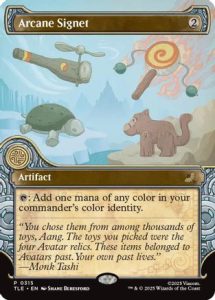
Pick cards you will keep for a long time, like your commander, a pet card or a staple that lives in every deck. Many people commission MTG alters on cards such as Sol Ring, Arcane Signet or basic lands because those cards appear in almost every Commander list. You can find affordable copies for alter projects in our MTG singles section, which keeps the base cost of the project down.
How MTG alters affect card value
This is the part many people get wrong. Altering a card generally removes it from the standard collector’s market. A painted card is no longer “Near Mint” in the usual sense, and grading companies treat altered cards differently from unmodified ones. In many cases, an altered card’s value depends on the artist’s reputation and the buyer’s taste, not on the card’s normal price.
- Cheap cards can gain value when painted by a sought-after artist, because buyers are paying for art.
- Expensive cards often lose value to collectors who want untouched copies, even if the art is beautiful.
- Personalized alters are hard to resell, since a design tailored to your deck may not appeal to others.
- Artist-signed sketches on cards can be desirable, but authenticity matters.
The golden rule: never alter a high-value card you might sell later unless you are sure you will keep it. If you want to invest in condition and resale, explore our graded cards instead, and keep alters for personal enjoyment.
Alters versus proxies
MTG alters are different from proxies. An alter starts as a genuine Magic card, while a proxy is a stand-in that is not an official card. Proxies are not allowed in sanctioned tournaments outside of judge-issued replacements, and selling fakes is a serious problem. Keep that line clear when you buy, sell or trade altered cards.
Caring for MTG alters
Paint and ink are more delicate than standard printed cards. With a little care, your alters will look great for years.
- Double-sleeve them with a snug inner sleeve and a quality outer sleeve from our accessories.
- Let paint cure fully before sleeving; ask your artist how long they recommend.
- Avoid heat and humidity, which can soften or crack paint.
- Store flat in a binder or deck box, not loose in a pocket.
- Shuffle gently to avoid scuffing raised paint.
- Keep alters out of direct sunlight to reduce fading.
Displaying your alters
Many collectors display finished MTG alters in top loaders, magnetic cases or framed shadow boxes. A display case lets you enjoy the art without the wear of regular play. Some players keep a “showcase” set of alters for special nights and an unaltered copy for weekly games.
Trying an alter yourself
If you are artistic, altering your own cards can be very rewarding. Start with bulk commons or extra basic lands so mistakes cost nothing. Use thin layers of acrylic paint, fine brushes and a matte varnish, and practice extensions on cards with simple backgrounds before tackling detailed pieces. A collection or bulk lot can supply plenty of practice cards.
Avoid thick paint that changes how the card feels in a sleeve, and always leave the name and mana cost visible. Even if you only play casually, keeping cards readable makes games smoother for everyone.
Buying and selling MTG alters
When buying an alter secondhand, ask who painted it and request clear photos of the front, back and edges. Check that the card underneath is genuine. When selling, be transparent about the artist and the card’s condition. If you have unmodified cards you no longer need, our sell and trade page is the best route, since altered cards are a niche market.
Ethics and etiquette of MTG alters
The alter community is built on respect for artists, both the original illustrators and the alterists who rework their art. Good etiquette keeps the hobby healthy. When you share photos of MTG alters online, credit the alterist by name and, where relevant, mention the original artist. If an alterist extends someone else’s illustration, they are building on that work, and acknowledging it is simply good manners.
- Do not copy another alterist’s signature design without permission.
- Pay fairly and on time. Hand-painted alters take many hours of skilled work.
- Respect waitlists and avoid pressuring artists for rush jobs.
- Be honest when reselling about who painted a card and how it has been handled.
Planning a fully altered deck
Some players dream of a Commander deck where every card is altered. It is a big project, so plan it in stages. Start with the commander and your most-played staples, then move to lands and finally the rest of the deck. Keeping one artist for the whole project gives a consistent style, while mixing artists creates a gallery effect. Either approach works; decide early so your MTG alters feel like a cohesive collection.
Budget is the other key consideration. Spreading commissions over months makes a full deck manageable and gives you time to rethink which cards truly deserve art. Decks change, and you do not want a painted card sitting unused after you cut it.
Themed basic lands
Basic lands are the most popular starting point for MTG alters. They are cheap, appear in nearly every deck and give an artist a wide canvas. A set of painted Forests that tell one continuous landscape across several cards is a showpiece that never rotates out of your deck. Ask your artist about panoramic sets, where each land shows one slice of a larger scene.
Shipping your cards to an alterist
If you send your own card, pack it in a penny sleeve, then a top loader, then sandwich it between stiff cardboard in a bubble mailer. Include a note with your name, order details and design brief. Ask the artist to return finished MTG alters packed the same way, ideally after the paint has fully cured, and use tracked shipping both directions so nothing gets lost.
Photograph the card before it leaves your hands. Clear photos of the front and back protect both you and the artist if questions arise later about condition, and they make a nice before-and-after record of the project. Many collectors keep a small album of their MTG alters showing each card before and after the paint.
Budgeting for your first commission
Set a clear budget before you contact an artist, and decide which matters more to you: speed, style or price. Simple art extensions usually cost less than full paints, and newer alterists often offer lower rates while they build portfolios. Starting small lets you learn what you like before committing to an elaborate centerpiece for your favorite commander.
Think of your first piece as a test run. If you love the result, you will have a trusted artist for future MTG alters and a better sense of what to ask for next time.
MTG alters FAQ
Can I play MTG alters at Friday Night Magic?
Generally yes, provided the alter follows the Magic Tournament Rules and the Head Judge or organizer approves. Casual Commander nights are usually even more relaxed.
Do alters reduce a card’s value?
For expensive cards they often do, because collectors want untouched copies. For cheap cards, a respected artist’s work can make the card worth more to the right buyer.
Can altered cards be graded?
Grading companies have specific policies on altered cards, and they are not treated the same as unmodified cards. Check the grading company’s current rules before submitting.
What paint do alterists use?
Most use acrylic paints with a protective matte or satin varnish, though techniques vary by artist.
Is an alter the same as a proxy?
No. An alter is a real card with added art, while a proxy is not an official Magic card.
Buying MTG alters online: a practical checklist
Shopping for MTG alters online is convenient, but a little preparation helps you get exactly what you expect. Use this checklist every time you buy Magic: The Gathering products, whether you are picking up a single card, a sealed box or a premium collection.
Before you order
- Confirm the exact product. Check the set name, card number, language and finish in the listing title and photos.
- Read the condition. Singles are usually listed as Near Mint, Lightly Played or similar. Graded cards show the grading company and grade.
- Check stock status. In-stock items ship sooner than pre-orders, which ship when the product releases.
- Compare value, not just price. A bundle with sleeves, dice or promos may be better value than packs alone.
- Know the policies. Read the shipping, returns and contact information before checkout.
When your order arrives
- Open the parcel carefully and check that everything matches the order.
- Inspect singles and slabs under good light straight away.
- Sleeve and store cards immediately so they keep their condition.
- Contact the store quickly if anything is wrong, with photos of the item and packaging.
How to store and care for MTG alters
Good storage protects both the look and the value of MTG alters. Cards are made of layered paper and ink, so heat, light, moisture and pressure all cause damage over time. A few simple habits make a big difference.
- Sleeve first. A soft penny sleeve stops scratches and fingerprints.
- Add rigid protection. Toploaders or semi-rigid holders stop bends for valuable cards.
- Choose the right binder. Side-loading, acid-free binders keep cards secure and easy to view. Avoid ring binders that press into cards.
- Control the environment. Keep cards in a cool, dry room away from windows, radiators and damp basements.
- Store sealed product flat. Boxes and tins last longer stored flat and out of direct light.
- Handle with clean, dry hands. Oils and moisture can mark card surfaces.
You can find sleeves, toploaders, binders and deck boxes in our TCG accessories range.
Useful terms for MTG alters collectors
- Single: an individual card sold on its own.
- Sealed: unopened product in its original factory wrap.
- Pull rate: how often a type of card appears in packs.
- Chase card: the most wanted card in a set.
- Slab: a card graded and sealed in a hard plastic case.
- NM / LP / MP / HP: condition grades from Near Mint to Heavily Played.
- Reprint: a card printed again in a later product.
- Pre-order: reserving a product before its release date.
Common mistakes to avoid with MTG alters
Even experienced collectors make avoidable mistakes. Keeping these in mind will save you money and protect your cards.
- Chasing one card through endless packs. If you need a specific card, the single is almost always the cheaper route.
- Skipping protection. A card left unsleeved for a day can pick up a scratch that lowers its value.
- Buying on hype alone. Prices can move quickly after a release. Check several recent sales before paying a premium.
- Ignoring condition notes. Two copies of the same card can differ greatly in value because of wear.
- Storing cards in the wrong place. Attics, garages and sunny windowsills are hard on cardboard.
- Forgetting your goal. A clear plan, such as finishing a set or upgrading a deck, keeps spending focused.
A simple plan to get started with MTG alters
- Set a goal. Decide whether you are collecting, playing or both.
- Set a monthly budget. Spending a fixed amount keeps the hobby fun and sustainable.
- Mix sealed and singles. Open packs for enjoyment and buy singles for the cards you really need.
- Protect as you go. Sleeves and toploaders cost little compared with the cards they protect.
- Track your collection. A simple list shows what you own and what you still want.
- Sell or trade duplicates. Turn cards you do not need into new additions through a trusted store.
Why shop for MTG alters at TCG Store USA
TCG Store USA is an online trading card shop for collectors and players. We list Magic: The Gathering products with clear titles and photos, separate in-stock items from pre-orders, and offer a sell and trade service when you want to turn cards into cash or store credit. Browse our singles, booster boxes and graded cards, or contact us with any question about an order or product. For official news, rules and release announcements, visit the official Magic: The Gathering site.
Final thoughts on MTG alters
MTG alters let your deck express your personality in a way no printed card can. Learn the tournament rules, choose cards you will keep, work with artists you trust, and protect the finished pieces carefully. Pick up affordable base cards from our shop, and if you need advice on choosing a card for your next project, reach out through our contact page.