MTG Lore: The Ultimate Guide to 12 Amazing Planes and Storylines
MTG lore spans more than three decades of stories, from ancient brother wars on Dominaria to multiversal invasions led by Phyrexia. Every card you play, from a common creature to a mythic Planeswalker, is a small window into that world. If you have ever wondered who Urza was, why the Eldrazi matter, or what a Planeswalker spark actually is, this guide is your map.
We explain the Multiverse, the most important planes, the Planeswalkers who travel between them, the biggest storylines, and how Wizards of the Coast weaves story into each set. You can read the official stories for free on the official Magic: The Gathering site, which publishes story chapters alongside most new releases.
The Multiverse: the stage for MTG lore
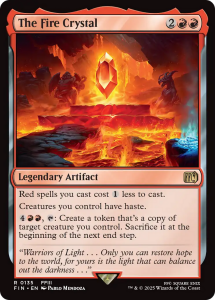
The Multiverse is an endless collection of worlds called planes, floating in a chaotic space known as the Blind Eternities. Most beings live their entire lives on a single plane, unaware others exist. Only rare individuals, and occasionally entire invading forces, can cross between worlds. This structure lets Magic visit radically different settings while keeping one shared story.
Mana and the land
In MTG lore, mana is energy drawn from the land itself. Each color represents a philosophy as much as an element: white for order and community, blue for knowledge, black for ambition, red for freedom and passion, and green for nature and instinct. Understanding the color pie helps explain why characters act the way they do.
Planeswalkers and the spark
Planeswalkers are beings born with a spark that lets them travel between planes. Before the Mending, Planeswalkers were almost godlike, able to reshape worlds. After that event, they became mortal beings with limited power, which is why modern Planeswalker cards represent allies you summon rather than near-deities.
The Gatewatch
The Gatewatch was a group of Planeswalkers who swore to protect the Multiverse. Its best-known members include Gideon Jura, Jace Beleren, Chandra Nalaar, Nissa Revane, Liliana Vess and later Ajani, Teferi and others. Their adventures drove much of the story from Battle for Zendikar to War of the Spark and remain a fan-favorite chapter of MTG lore.
The spark after March of the Machine
The Phyrexian invasion ended with a major change: many Planeswalkers lost their sparks, and Planeswalking itself became rarer. Since then, travel between worlds has relied more on Omenpaths, new routes between planes that opened after the invasion. This shift changed how the story connects planes and introduced more crossover between worlds.
The most important planes in MTG lore
Dozens of planes have appeared in sets, but a core group returns again and again. Knowing them gives you a strong foundation for every new release.
- Dominaria: the original home of the story, featuring Urza, Teferi, the Weatherlight crew and countless ancient wars.
- Phyrexia (New Phyrexia): a biomechanical hell world bent on “compleating” the Multiverse.
- Ravnica: a city-plane ruled by ten guilds, each a two-color alliance.
- Zendikar: a wild plane of adventure that served as the prison of the Eldrazi titans.
- Innistrad: a gothic horror world of vampires, werewolves and zombies.
- Kamigawa: inspired by Japanese myth, later revisited as a neon-futuristic world.
- Theros: a Greek-mythology plane where gods draw power from belief.
- Amonkhet: an Egyptian-inspired world twisted by Nicol Bolas.
- Tarkir: a plane of clans and dragons, home of Sarkhan Vol.
- Eldraine: a fairy-tale realm of courts and wild magic.
- Lorwyn and Shadowmoor: one plane that shifts between a bright and a dark aspect.
- Kaladesh: an inventor’s paradise powered by aether.
Major storylines through the years
MTG lore has several long arcs that span many sets. These are the big ones every fan should know.
The Brothers’ War
Urza and Mishra, two brilliant artificer brothers, waged a war that devastated the continent of Terisiare on Dominaria. Their conflict drew the attention of Phyrexia and ended with the cataclysmic Sylex Blast. The story was revisited in the 2022 set The Brothers’ War, which brought these characters back to the spotlight.
The Weatherlight Saga
Across Mirage, Tempest, Urza’s Saga and the Invasion block, the crew of the skyship Weatherlight fought to stop the first Phyrexian invasion of Dominaria. Characters like Gerrard, Sisay, Karn and Squee became early icons of the story.
Time Spiral and the Mending
Time rifts threatened to destroy Dominaria, and several Planeswalkers sacrificed themselves to seal them. The Mending followed, changing the nature of Planeswalkers forever and setting up the modern era of MTG lore.
The Eldrazi and Zendikar
Colossal Eldrazi titans such as Emrakul, Ulamog and Kozilek were imprisoned on Zendikar. Their escape in Rise of the Eldrazi and the later battles in Battle for Zendikar and Eldritch Moon reshaped two planes and helped form the Gatewatch.
Nicol Bolas and War of the Spark
The ancient Elder Dragon Nicol Bolas schemed for millennia to regain godlike power. His plan culminated on Ravnica in War of the Spark, where dozens of Planeswalkers united to stop him. It remains one of the most celebrated events in MTG lore.
The Phyrexian invasion
Phyrexia returned under Elesh Norn in Dominaria United, Phyrexia: All Will Be One and March of the Machine. The invasion struck dozens of planes at once before a coalition of heroes pushed it back, at a terrible cost.
MTG lore after the invasion
The years that followed explored a changed Multiverse. Wilds of Eldraine dealt with the invasion’s aftermath, Murders at Karlov Manor turned Ravnica into a detective story, Outlaws of Thunder Junction introduced a frontier heist, Bloomburrow visited a plane of animal folk, and Duskmourn trapped survivors inside a living horror house. More recent sets continued to visit new and returning planes, including Aetherdrift, Tarkir: Dragonstorm and Edge of Eternities, while Lorwyn Eclipsed returned to the bright and dark sides of Lorwyn-Shadowmoor.
Universes Beyond and canon
Universes Beyond sets, such as Final Fantasy, Marvel crossovers and other licensed products, bring outside worlds into Magic. They are fun to collect and play, but they are not part of the core MTG lore canon. Some fans love them for their art and characters even if they read separately from the main story.
How MTG lore connects to every set
Each set is designed around a plane and a story moment. Card mechanics reflect the setting, so a heist set has cards about stealing, and a horror set leans into fear and survival. Flavor text, art and card names tell slices of the story, while official story chapters fill in the gaps.
- Legendary creatures represent named characters and often appear as commanders.
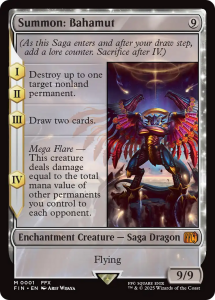
- Saga cards tell short historical events in chapters.
- Flavor text gives quotes, diaries and in-world documents.
- Story spotlight cards mark key moments in the plot of a set.
Collecting by story
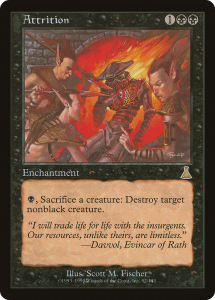
Many collectors build binders by plane or by character arc, such as every printing of a favorite Planeswalker. Others build Commander decks around lore figures, like Urza, Teferi or Elesh Norn. Shopping MTG singles makes it easy to pick only the characters you love instead of opening random packs.
Where to start reading MTG lore
If you want to dive in, start with the current set’s story on the official site and work backward to the arcs that interest you. Fan wikis summarize decades of continuity, and many classic novels are still easy to find. Pick one plane you love visually and read its story first; it is a gentle way into a huge fictional universe.
- Read the current set’s official story chapters.
- Explore the Brothers’ War and Weatherlight arcs for the classic foundation.
- Follow the Gatewatch from Battle for Zendikar through War of the Spark.
- Finish with the Phyrexian invasion and the sets that followed.
Playing the story
Commander is the most lore-friendly format, because your commander is literally a character. Building a deck around a famous figure turns each game into a small story. Preconstructed Commander decks are an affordable way to start, and many feature legendary characters right out of the box.
Want to trade in older cards to fund a lore-themed collection? The sell and trade page lets you exchange cards for cash or store credit.
Iconic villains of MTG lore
Great stories need great villains, and MTG lore has some of the best in fantasy gaming. Each one represents a different kind of threat, which is why they keep returning in new sets and Commander decks.
- Yawgmoth: the original ruler of Phyrexia, a fallen healer who built a nightmare world of flesh and metal.
- Elesh Norn: the Grand Cenobite who led New Phyrexia’s invasion of the Multiverse.
- Nicol Bolas: the scheming Elder Dragon whose plots shaped Amonkhet, Ravnica and more.
- Emrakul: the largest Eldrazi titan, whose arrival twisted Innistrad.
- Tezzeret: an artificer Planeswalker who served Bolas and Phyrexia at different times.
Heroes worth following
On the other side, characters such as Karn the silver golem, Teferi the time mage, Chandra the pyromancer and Jace the mind mage carry many of the arcs. Following one hero from set to set is an easy way to make sense of MTG lore, because their personal stories tie the larger events together.
The Elder Dragons and ancient history
Long before modern Planeswalkers, the Elder Dragon War shaped Dominaria. Nicol Bolas and his twin, Ugin, were among the survivors. Ugin later became central to the Eldrazi story on Zendikar and the Tarkir timeline, showing how deep MTG lore connections can run across decades.
How story affects card value and collecting
Lore often drives demand. When a beloved character returns, older cards featuring them can attract renewed interest from collectors and Commander players. Popular legendary creatures from big storylines tend to become favorite commanders, and those decks need supporting cards from the same plane. That is one reason MTG lore matters even to players who rarely read the stories.
Reading MTG lore through card art
You do not need to read a single novel to enjoy MTG lore. Card art often shows key scenes: a city burning, a hero falling, a portal opening. Lay out the story spotlight cards of a set in release order and you can follow the plot visually. Many players discover a favorite plane this way, then go back to read the full chapters.
Secret Lair and showcase treatments
Special treatments, such as showcase frames and Secret Lair drops, frequently reimagine story moments with alternate art. Collectors who love MTG lore often chase these versions of iconic characters, building binders that tell a story through different artists’ eyes.
A fun project is a “story binder” with one page per major arc: the Brothers’ War, the Weatherlight Saga, the Eldrazi, War of the Spark and the Phyrexian invasion. Fill each page with legendary creatures, Sagas and spotlight cards, and you have a visual timeline of MTG lore to share with friends.
MTG lore FAQ
Is MTG lore canon across all sets?
Core Magic sets share one canon story. Universes Beyond crossover products are separate and not part of the main storyline.
Who is the most important character in MTG lore?
Urza, Nicol Bolas and Jace Beleren are often named, but Karn, Teferi and Elesh Norn are just as central depending on the era.
Can Planeswalkers still travel between planes?
After March of the Machine, many lost their sparks. Travel now often uses Omenpaths opened after the invasion.
Where can I read the official stories?
The official Magic site publishes free story chapters for most sets, usually around release time.
Buying MTG lore online: a practical checklist
Shopping for MTG lore online is convenient, but a little preparation helps you get exactly what you expect. Use this checklist every time you buy Magic: The Gathering products, whether you are picking up a single card, a sealed box or a premium collection.
Before you order
- Confirm the exact product. Check the set name, card number, language and finish in the listing title and photos.
- Read the condition. Singles are usually listed as Near Mint, Lightly Played or similar. Graded cards show the grading company and grade.
- Check stock status. In-stock items ship sooner than pre-orders, which ship when the product releases.
- Compare value, not just price. A bundle with sleeves, dice or promos may be better value than packs alone.
- Know the policies. Read the shipping, returns and contact information before checkout.
When your order arrives
- Open the parcel carefully and check that everything matches the order.
- Inspect singles and slabs under good light straight away.
- Sleeve and store cards immediately so they keep their condition.
- Contact the store quickly if anything is wrong, with photos of the item and packaging.
How to store and care for MTG lore
Good storage protects both the look and the value of MTG lore. Cards are made of layered paper and ink, so heat, light, moisture and pressure all cause damage over time. A few simple habits make a big difference.
- Sleeve first. A soft penny sleeve stops scratches and fingerprints.
- Add rigid protection. Toploaders or semi-rigid holders stop bends for valuable cards.
- Choose the right binder. Side-loading, acid-free binders keep cards secure and easy to view. Avoid ring binders that press into cards.
- Control the environment. Keep cards in a cool, dry room away from windows, radiators and damp basements.
- Store sealed product flat. Boxes and tins last longer stored flat and out of direct light.
- Handle with clean, dry hands. Oils and moisture can mark card surfaces.
You can find sleeves, toploaders, binders and deck boxes in our TCG accessories range.
Useful terms for MTG lore collectors
- Single: an individual card sold on its own.
- Sealed: unopened product in its original factory wrap.
- Pull rate: how often a type of card appears in packs.
- Chase card: the most wanted card in a set.
- Slab: a card graded and sealed in a hard plastic case.
- NM / LP / MP / HP: condition grades from Near Mint to Heavily Played.
- Reprint: a card printed again in a later product.
- Pre-order: reserving a product before its release date.
Common mistakes to avoid with MTG lore
Even experienced collectors make avoidable mistakes. Keeping these in mind will save you money and protect your cards.
- Chasing one card through endless packs. If you need a specific card, the single is almost always the cheaper route.
- Skipping protection. A card left unsleeved for a day can pick up a scratch that lowers its value.
- Buying on hype alone. Prices can move quickly after a release. Check several recent sales before paying a premium.
- Ignoring condition notes. Two copies of the same card can differ greatly in value because of wear.
- Storing cards in the wrong place. Attics, garages and sunny windowsills are hard on cardboard.
- Forgetting your goal. A clear plan, such as finishing a set or upgrading a deck, keeps spending focused.
A simple plan to get started with MTG lore
- Set a goal. Decide whether you are collecting, playing or both.
- Set a monthly budget. Spending a fixed amount keeps the hobby fun and sustainable.
- Mix sealed and singles. Open packs for enjoyment and buy singles for the cards you really need.
- Protect as you go. Sleeves and toploaders cost little compared with the cards they protect.
- Track your collection. A simple list shows what you own and what you still want.
- Sell or trade duplicates. Turn cards you do not need into new additions through a trusted store.
Why shop for MTG lore at TCG Store USA
TCG Store USA is an online trading card shop for collectors and players. We list Magic: The Gathering products with clear titles and photos, separate in-stock items from pre-orders, and offer a sell and trade service when you want to turn cards into cash or store credit. Browse our singles, booster boxes and graded cards, or contact us with any question about an order or product. For official news, rules and release announcements, visit the official Magic: The Gathering site.
Final thoughts on MTG lore
MTG lore turns cardboard into a living world full of heroes, villains and history. Start with one plane or character, follow the story through the sets, and let it guide your collection. Explore MTG singles, booster boxes, accessories and the full shop. Questions? Visit the contact page.